

TL;DR:
- Modular shelving improves retail space utilization and reduces reset labor costs through adjustable, standardised components. It offers higher vertical capacity, quick reconfiguration, and lower total ownership costs compared to fixed fixtures. Retailers benefit from consistent branding, merchandising flexibility, and operational efficiency across multiple locations.
Modular shelving is defined as a system of interchangeable uprights, shelves, and accessories that retailers can reconfigure without specialist tools or professional joiners. The benefits of modular shelving retail owners gain are measurable: slatwall panels deliver up to 2.5 times greater vertical space utilisation compared to fixed shelving, and switching from bespoke welded fixtures to modular systems reduces seasonal reset labour by 25–40%. These are not marginal gains. They represent the difference between a store that adapts to trading conditions and one that is held hostage by its own fixtures.
1. How modular shelving improves retail space utilisation
Retail space costs money whether you fill it well or not. Modular shelving systems let you extract far more value from every square metre by working vertically as well as horizontally.

Slatwall panels and tall gondola units are the clearest examples. Modular slatwall systems achieve up to 2.5 times greater vertical space utilisation than traditional fixed shelving. That figure means a wall that previously held three shelf levels can effectively carry the equivalent of seven or eight product rows when accessories such as hooks, brackets, and bins are added at variable heights.
Gondola bays compound this advantage on the shop floor. Upgrading from a 1.6m gondola to a 2.0m unit adds an entire shelf level per bay without increasing the floor footprint. For a convenience store or small supermarket with 20 bays, that is 20 additional shelf levels gained at zero cost in floor area.
- Adjustable shelf heights in 25mm or 50mm increments accommodate everything from flat-pack boxes to tall bottles without wasted vertical gaps.
- Wall units and gondola end caps create display zones that guide shoppers through the store naturally.
- Corner bays and internal corner shelving configurations use otherwise dead space productively.
Pro Tip: Before investing in additional floor units, audit your existing gondola heights. Swapping to taller uprights is often the fastest way to add capacity in a compact store without widening aisles or losing customer flow.
2. Operational efficiency gains from modular systems
Time spent reconfiguring fixtures is time not spent serving customers or managing stock. Modular shelving cuts that reconfiguration time significantly.
Switching to modular display systems reduces labour hours for seasonal store resets by 25–40% compared to bespoke welded fixtures. That reduction comes directly from tool-free shelf adjustment and standardised upright patterns that any member of staff can operate after a brief briefing.
The operational benefits extend beyond seasonal resets:
- Rapid planogram updates. Shelf positions change in minutes, not hours, allowing you to respond to supplier promotions or clearance needs the same day.
- A/B merchandising tests. Modular systems enable A/B tests and inventory shifts with minimal disruption, so you can trial two product layouts simultaneously and measure which drives higher sales.
- No store closures for resets. Because adjustments require no power tools or specialist contractors, you can reconfigure sections during trading hours without closing the shop.
- Bay extensions without replacement. Adding a bay to an existing run requires only a new upright and shelves, not a full fixture replacement.
Pro Tip: Train at least two members of staff on your modular system’s upright pattern and clip mechanism. Cross-trained staff means resets happen on your schedule, not when a contractor is available.
3. Cost advantages over fixed or bespoke fixtures
The primary advantage of modular shelving is not the upfront price. It is the significant reduction in total cost of ownership through reusability and less material waste over the fixture’s lifetime.
Fixed or bespoke welded shelving is typically scrapped when a store rebrands, refits, or changes its product range. Modular frames, by contrast, carry across store formats and seasonal resets. The uprights you buy today can serve a completely different layout in three years without replacement.
| Cost factor | Fixed or bespoke shelving | Modular shelving |
|---|---|---|
| Initial procurement | Often higher due to custom fabrication | Lower via standardised components |
| Reconfiguration cost | Contractor and joinery fees each time | Staff time only, no specialist required |
| Seasonal reset waste | Fixtures frequently scrapped | Components reused across resets |
| Spare parts | Bespoke parts, long lead times | Standardised parts, readily available |
| Multi-site rollout | Separate bespoke orders per site | One system family across all locations |
Standardised components also simplify repairs. A damaged shelf in a modular bay is replaced with a matching part from stock. A damaged shelf in a bespoke welded unit may require a fabricator’s visit and a weeks-long lead time.
4. Merchandising flexibility and customer experience
Modular shelving does more than hold products. It shapes how customers move through your store and what they notice first.
Adjustable shelf heights let you create clear product zones without permanent signage or structural changes. A health and beauty section can sit at eye level for its target customer, while bulkier household goods occupy lower shelves. Rearranging those zones for a seasonal promotion takes one staff member and an afternoon, not a refit budget.
Retail-grade accessories integrate directly into modular uprights and slatwall panels:
- Price strips and label holders clip onto shelf edges to keep pricing clear and consistent.
- Shelf dividers and pushers maintain product facing without constant manual tidying.
- Signage brackets and header boards attach to upright tops for promotional messaging.
- Hooks and basket fittings extend product range without adding new bays.
These accessories support effective retail display solutions that improve shopper navigation and dwell time. A well-zoned store with clear sightlines and tidy facing consistently outperforms a cluttered one, regardless of the product range. Modular shelving gives you the physical infrastructure to maintain that standard day to day.
5. Brand consistency across multiple locations
Retail chains face a specific challenge that independent stores do not: keeping every location looking and functioning identically. Modular shelving solves this at scale.
Using the same modular system across multiple locations ensures a cohesive customer experience and facilitates rapid brand updates. When head office issues a new planogram, every store manager works with identical uprights, shelf clips, and accessory slots. The update rolls out uniformly, not approximately.
Standardising on a modular fixture family also reduces procurement complexity. Buying one system family in volume generates better pricing than ordering bespoke fixtures for each site individually. Spare parts, accessories, and replacement shelves are interchangeable across the estate, which simplifies both logistics and maintenance.
6. How to choose and implement modular shelving correctly
Most retailers assume any adjustable shelving qualifies as modular. Truly modular systems require tool-free adjustment and standardised upright patterns. Without those two features, you lose the operational agility that makes modular shelving worth the investment.
Use this checklist when evaluating any system:
- Tool-free shelf adjustment. Shelves should clip in and out without spanners, screwdrivers, or mallets.
- Standardised height increments. Look for 25mm or 50mm adjustment increments to accommodate the full range of your product heights precisely.
- Load capacity ratings. UK retail shelving carries between 80kg and 300kg uniformly distributed load per shelf. Match the rating to your heaviest product category, not your average one.
- Bay add-on compatibility. Confirm that additional bays connect to existing uprights without adaptor plates or custom brackets.
- Accessory ecosystem. Price strips, dividers, hooks, and signage brackets should all be available within the same system family.
- Reusability across formats. Ask the supplier whether the uprights work in both wall-mounted and freestanding gondola configurations.
Budget allocation matters as much as system selection. Industry benchmarks recommend allocating 65–70% of a retail fit-out budget to customer-facing shelving, with 30–35% going to back-of-house racking. Spending disproportionately on stockroom storage at the expense of shop floor display reduces the revenue-generating capacity of your fit-out. A retail shelving layout guide can help you plan the balance before you commit to a purchase.
Key takeaways
Modular shelving delivers measurable gains in space utilisation, labour efficiency, and total cost of ownership that fixed or bespoke fixtures cannot match.
| Point | Details |
|---|---|
| Space utilisation | Slatwall and tall gondola units deliver up to 2.5x more vertical capacity without expanding floor area. |
| Labour savings | Modular systems cut seasonal reset labour by 25–40% through tool-free, standardised adjustment. |
| Total cost of ownership | Reusable frames and standardised spare parts reduce lifetime fixture costs significantly. |
| Merchandising agility | Adjustable heights and accessory ecosystems support rapid seasonal and promotional changes. |
| Multi-site consistency | One modular system family across all locations keeps brand presentation uniform and updates fast. |
Why modular shelving is the most underrated decision in retail fit-out
I have worked with retailers ranging from single-site independents to chains with dozens of locations. The most consistent mistake I see is treating shelving as a one-time capital purchase rather than an operational asset.
Retailers who buy fixed or bespoke fixtures often do so because the upfront quote looks lower. What they do not account for is the contractor cost every time they want to move a shelf, the waste when a refit makes the old fixtures obsolete, and the staff hours lost to resets that should take an afternoon but take a week. I have seen stores where a seasonal reset required closing a section for three days because the shelving was welded in place.
The other pitfall I see regularly is buying shelving that looks modular but lacks tool-free adjustment. If your staff need a spanner to change a shelf height, the system will not get reconfigured. It will sit in the same configuration it arrived in, regardless of how your product range evolves.
My honest advice: prioritise the accessory ecosystem over the shelf price. A system with a full range of compatible dividers, price strips, and signage brackets will earn its cost back in merchandising quality within the first trading season. A cheaper system with no accessories forces you to bodge solutions that look unprofessional and frustrate staff. The role of gondola shelving in a well-planned store is not decorative. It is structural to how your business performs.
— Lee
How DirectShopfittings can help you get this right
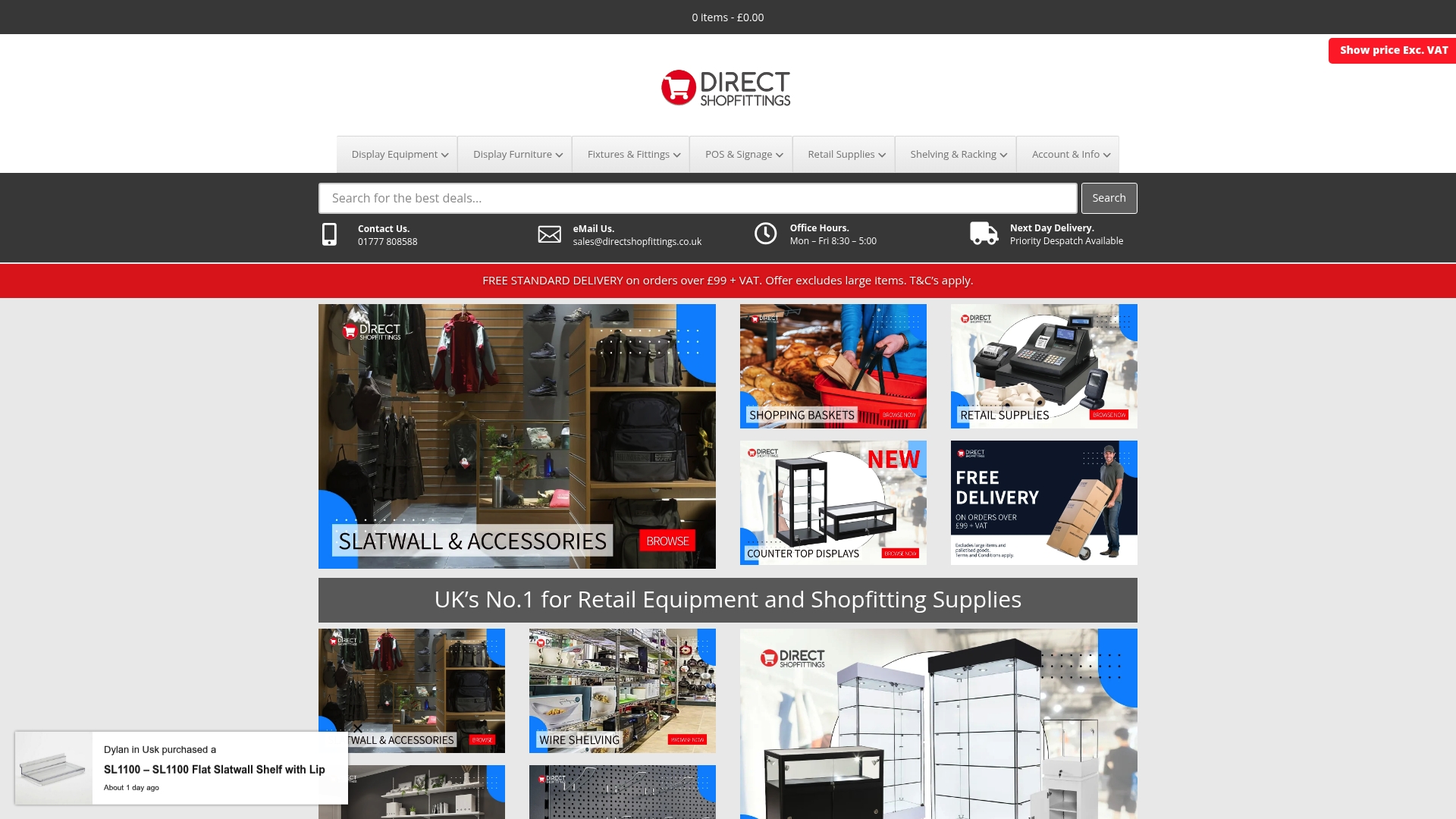
DirectShopfittings supplies modular shelving systems and shopfitting equipment to retailers across the UK, from single-site boutiques to multi-location chains. The range covers gondola bays, wall shelving, slatwall panels, and a full accessory ecosystem, all available with rapid delivery and competitive pricing.
If you are planning a new fit-out or upgrading existing fixtures, the essential shopfitting supplies list is a practical starting point. It covers the core equipment categories most retailers need, with guidance on quantities and specifications. DirectShopfittings also offers expert advice on system selection, so you can match load capacities, upright patterns, and accessory compatibility to your specific store before placing an order.
FAQ
What are the main benefits of modular shelving in retail?
Modular shelving delivers greater vertical space utilisation, faster seasonal resets, and lower total cost of ownership than fixed or bespoke fixtures. Slatwall systems achieve up to 2.5 times more vertical capacity, and modular systems reduce reset labour by 25–40%.
How much weight can retail modular shelving hold?
UK retail shelving systems carry between 80kg and 300kg uniformly distributed load per shelf, depending on the specification. Always match the load rating to your heaviest product category, not your average stock weight.
Is modular shelving suitable for small retail stores?
Modular shelving suits small stores particularly well because taller gondola units add shelf capacity without increasing floor footprint. Upgrading from a 1.6m to a 2.0m gondola adds a full shelf level per bay at no cost in floor area.
What makes a shelving system truly modular?
A truly modular system offers tool-free shelf adjustment and standardised upright patterns at 25mm or 50mm increments. Without those features, reconfiguration requires specialist labour and the operational benefits disappear.
How should I split my fit-out budget between shop floor and stockroom shelving?
Industry benchmarks recommend allocating 65–70% of a retail fit-out budget to customer-facing shelving and 30–35% to back-of-house racking. Prioritising shop floor display maximises the revenue-generating capacity of your fit-out investment.