

TL;DR:
- Retail stores can improve sales and foot traffic without renovation by optimizing visual merchandising and layout. Using flexible fixtures, decluttering, and digital updates can create impactful changes quickly and affordably. Regular resets and strategic use of space maximize store appeal and customer engagement.
A retail display upgrade without renovation is the practice of refreshing your store’s visual merchandising using fixtures, layout changes, and digital tools, without touching a single wall or floor. Small retailers often assume a tired shop floor needs a full refit to compete. It does not. Window displays alone boost foot traffic by 23%, yet the majority of that uplift comes from styling and layout choices, not construction. The industry term for this discipline is visual merchandising, and mastering it is the fastest, most cost-effective way to improve retail presentation and drive sales.
Which tools and fixtures are essential for a retail display upgrade without renovation?
A carefully selected toolkit of garment rails, mannequins, and flexible promotional fixtures improves presentation, eases resets, and boosts trading ease without a single structural change. The key word is “flexible.” Fixtures that can be repositioned, restocked, and restyled in under an hour give you the ability to respond to seasons, trends, and stock levels without calling a contractor.
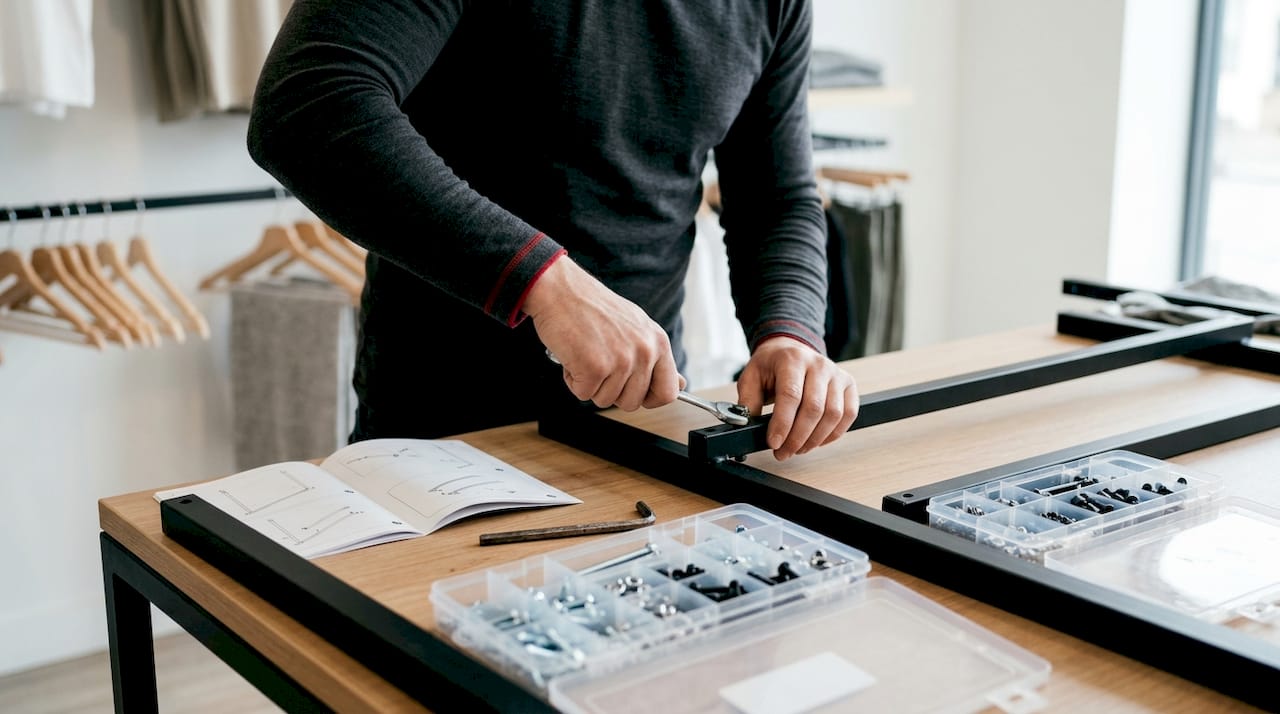
Garment rails are the workhorses of fashion and lifestyle retail. A freestanding chrome or black powder-coated rail can be moved to the window for a seasonal push, then shifted to the shop floor mid-week to create a new collection zone. Mannequins serve a different purpose: they show the customer a finished look and remove the mental effort of imagining how a product works. Used sparingly, they are powerful. Small retailers often over-rely on mannequins; two or three well-dressed forms outperform a row of ten every time.
Promotional fixtures, including dump bins, countertop display stands, and gondola shelving units, handle the volume work. They keep stock visible and accessible without requiring permanent installation. Modular display systems are particularly useful here because you can reconfigure them as your product range changes.
| Fixture type | Primary function | Space impact | Typical cost range |
|---|---|---|---|
| Garment rail | Clothing and accessory display | Low | £ |
| Mannequin | Outfit and lifestyle presentation | Low | ££ |
| Gondola shelving | High-volume product display | Medium | ££ |
| Countertop display stand | Impulse and add-on sales | Very low | £ |
| Dump bin | Clearance and promotional stock | Low | £ |
Pro Tip: When choosing fixtures for a small shop, prioritise units with castors or feet that can be lifted without tools. The ability to reconfigure your floor plan in 20 minutes is worth more than a marginally better-looking fixed unit.
How can small retailers optimise store layout and customer flow without structural changes?
The single most effective layout change costs nothing. Retailers should “edit before they add”, removing clutter and clearing sightlines before introducing any new element. A customer who can see across your shop from the entrance feels at ease. A customer who sees a wall of product from the door feels overwhelmed and often leaves.
Start with these layout principles:
- Clear the entrance zone. The first 1–2 metres inside your door should be open. Customers need a moment to adjust before they engage with product.
- Create a natural path. Position your best-selling or most visually striking fixture to the right of the entrance. Research consistently shows customers in the UK tend to turn right upon entering a shop.
- Use vertical space. Wall-mounted signage and floor graphics communicate brand identity and guide customers without using any floor space at all. A well-placed overhead sign can direct traffic to a back-of-store section that would otherwise go unvisited.
- Reduce fixture density. If your floor plan feels tight, remove one fixture entirely. The remaining displays will perform better because customers can reach them comfortably.
- Group by story, not by category. A colour-story or lifestyle grouping creates a reason to browse. A category arrangement, all blue items together, all size-medium items together, creates a warehouse feel.
A good retail shelving layout follows the same logic: lead with a hero product at eye level, support it with complementary items above and below, and leave deliberate gaps to signal quality rather than volume.
Pro Tip: Walk your shop as a customer would, starting from the pavement outside. Photograph what you see at each step. The camera reveals sightline problems your familiarity with the space hides.
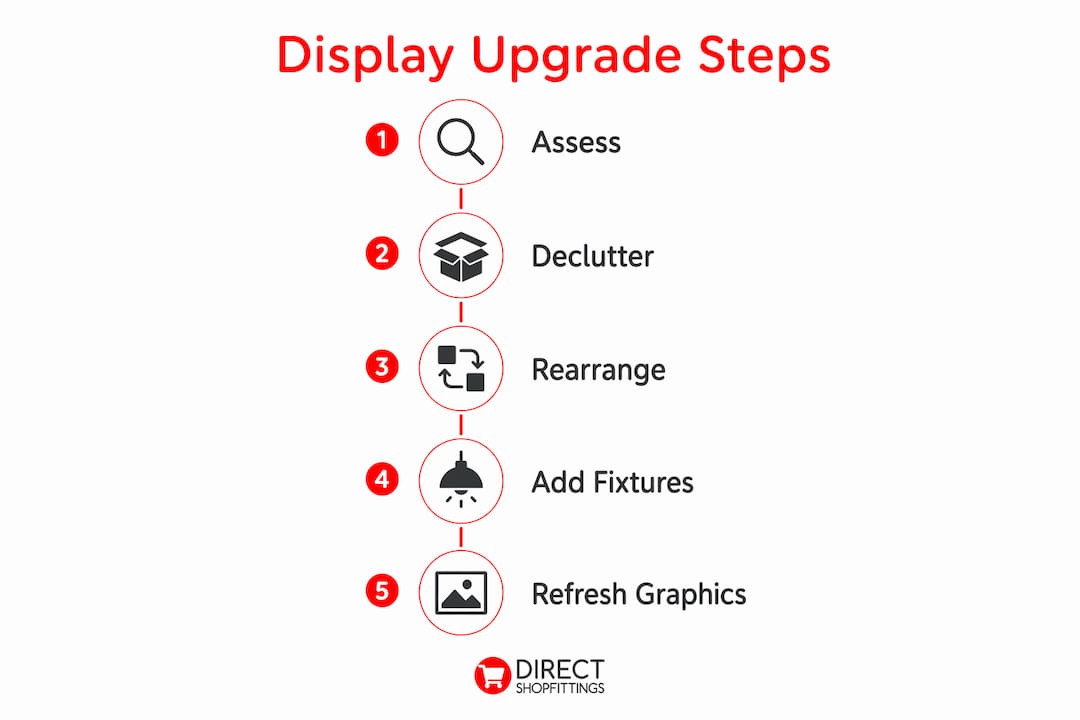
What digital and non-structural display enhancements boost retail appeal effectively?
Digital window displays are the highest-return non-renovation investment available to small retailers right now. Managed digital window displays increase footfall by 24%, sales by 33%, and message retention by 83% compared to static posters when updated monthly. Those are not marginal gains. They represent a material shift in how many people walk through your door and how much they spend.
The mechanism is straightforward. Digital screens capture movement and light in a way that printed posters cannot. Digital displays capture 400%–600% more attention than static alternatives. That attention advantage translates directly into footfall when the screen is visible from the street.
To get the most from a digital display, follow this content cycle:
- Update content monthly at minimum. Static screens with unchanged content see a rapid decline in effectiveness. The novelty effect disappears within weeks.
- Use animated or video content. Motion triggers peripheral vision in a way that still images do not. Even a simple animated logo or scrolling text outperforms a static graphic.
- Align content with your trading calendar. New season, bank holiday promotions, and local events all give you a reason to change the screen and give passers-by a reason to look again.
- Commission professionally produced content. Poorly designed graphics undermine the credibility of your brand. The screen is your most visible marketing surface.
“Professionally managed digital window displays with automated monthly content updates provide a unique ROI advantage that hardware-only solutions fail to deliver. The content is the product, not the screen.”
KhazinaWindow Live ROI research, 2026
For retailers not yet ready for digital, seasonal refreshes using printed graphics, new props, and recoloured fabric backdrops achieve a similar reset effect at lower cost. The principle is the same: change creates attention.
What are common mistakes to avoid when upgrading retail displays?
Overfilling fixtures is the most common error small retailers make when upgrading store displays. The instinct to show as much stock as possible is understandable, but it works against you. Deliberate empty space, known in visual merchandising as “breathing space” or negative space, increases the perceived value of the products around it and speeds up customer decision-making. A rail with 12 garments reads as a curated collection. A rail with 40 garments reads as a clearance sale.
The second most common mistake is failing to measure. Measuring customer dwell time and footfall separately is the only reliable way to know whether a display change has worked. Relocating a low-engagement display into a natural customer pathway can outperform a complete redesign of the display itself. You do not need expensive technology to do this. A simple tally counter and a weekly observation routine give you enough data to make confident decisions.
| Common mistake | Best practice |
|---|---|
| Overfilling fixtures | Leave deliberate gaps; aim for 60–70% fill on rails and shelves |
| Ignoring dwell time data | Track dwell time by zone weekly and adjust fixture placement accordingly |
| Changing everything at once | Refresh one zone per month to isolate what drives results |
| Neglecting seasonal resets | Schedule quarterly display reviews tied to your trading calendar |
| Inconsistent signage | Use a single font, colour palette, and sign format across all displays |
Maintenance is as important as the initial upgrade. A display that looked sharp in january will look tired by march without attention. Build a monthly visual merchandising checklist into your routine. Check that price tickets are current, that facing is neat, and that hero products are still at eye level. These small acts of discipline compound over time into a consistently strong retail presentation.
Pro Tip: Assign one team member ownership of each display zone. Named responsibility produces far better results than a general instruction to “keep it tidy.” People take pride in a space that is theirs.
Key takeaways
A retail display upgrade without renovation works because visual merchandising discipline, the right fixtures, and regular content updates deliver measurable sales and footfall gains without structural cost.
| Point | Details |
|---|---|
| Edit before you add | Remove clutter and clear sightlines before introducing any new fixture or display element. |
| Choose flexible fixtures | Prioritise garment rails, gondola units, and modular systems that can be repositioned without tools. |
| Use vertical space | Wall-mounted signage and floor graphics guide customers and reinforce brand identity without using floor space. |
| Digital displays drive footfall | Managed digital window screens updated monthly increase footfall by 24% and sales by 33%. |
| Measure dwell time by zone | Track customer behaviour weekly to guide fixture placement and identify underperforming displays. |
What I have learnt from watching small shops transform without spending a fortune
The retailers I have seen make the biggest impact are rarely the ones with the largest budgets. They are the ones who treat their shop floor as a living thing that needs weekly attention, not an annual overhaul. The most striking transformation I have witnessed involved nothing more than removing two overcrowded fixtures, repositioning a single mannequin to face the window, and adding a floor graphic near the entrance. Footfall through the door increased noticeably within a fortnight. No builders. No disruption. No invoice for thousands of pounds.
What surprises most shop owners is how much of the problem is self-inflicted. The urge to fill every shelf and hang every garment is deeply human. Empty space feels like lost opportunity. In retail, it is the opposite. The shops that look expensive are the shops that show restraint. That is a discipline you can teach your team in an afternoon.
The other lesson I keep returning to is the value of routine. A display that is refreshed every four weeks, even with minor changes, consistently outperforms a display that was brilliant six months ago and has not been touched since. Customers notice change. They return to see what is new. That habit of returning is worth far more than any single fixture investment.
If you are serious about upgrading store displays without renovation, start with a ruthless edit of what you already have. Then invest in two or three flexible fixtures that can serve multiple purposes. Build a monthly reset into your diary. The results will follow.
— Lee
How DirectShopfittings can help you refresh your displays affordably
Small retailers looking for practical, budget-conscious display solutions will find DirectShopfittings stocks the full range of fixtures needed to put this guide into practice.
From garment rails and mannequins to gondola shelving and countertop display stands, DirectShopfittings supplies both independent boutiques and larger retail chains with quality equipment at competitive prices. Their supplier network means hard-to-find items are sourced quickly, saving you time when a seasonal reset is on a tight deadline. The essential shopfitting supplies list is a practical starting point for any small retailer planning a display refresh. For a broader overview of what is available, the full retail fixtures range covers every fixture category discussed in this guide.
FAQ
Can I upgrade my retail display without spending much money?
Yes. The most impactful changes, decluttering, repositioning fixtures, and improving sightlines, cost nothing. Investing in one or two flexible fixtures such as a garment rail or countertop display stand delivers measurable results at low cost.
How often should I refresh my retail displays?
Monthly updates are the minimum for maintaining customer interest. Digital displays with static content lose their footfall effect rapidly, and the same principle applies to physical displays.
What is “breathing space” in visual merchandising?
Breathing space is deliberate empty space left on rails and shelves. It increases perceived product value and helps customers make decisions faster by reducing visual noise.
How do I know if my display changes are working?
Track dwell time by zone and footfall separately. Relocating a low-engagement display into a natural customer pathway often outperforms redesigning the display itself. A weekly tally count is sufficient for most small shops.
Do digital window displays work for small independent retailers?
Yes. Managed digital window displays increase footfall by 24% and sales by 33% when content is updated monthly, making them one of the highest-return non-renovation investments available to small retailers.