

TL;DR:
- Gondola shelving is a versatile retail fixture that shapes customer flow and enhances sales through strategic placement. Proper layout, aisle width, and planograms maximize product visibility and encourage impulse buying, especially on end caps. Regular review and adjustment of shelving configurations are essential for maintaining optimal store performance and customer experience.
Gondola shelving is defined as a freestanding, modular display system built from metal bases, vertical uprights, and adjustable shelves, configured as either single-sided wall runs or double-sided island units. The role of gondola shelving in retail goes far beyond storage. It shapes how customers move through your store, what they notice, and what they buy. Retailers from independent convenience stores to large supermarket chains rely on gondola systems because they combine structural flexibility with genuine merchandising power. Understanding how to configure and arrange these fixtures is one of the most direct ways to improve both customer experience and sales performance.
How does gondola shelving shape customer movement?
Gondola shelving functions as retail infrastructure that integrates layout, flow, and visibility rather than acting as simple storage. That distinction matters. When you treat your shelving as a merchandising tool, every aisle becomes a structured path that guides shoppers towards the products you want them to see.
Double-sided island gondolas are placed in the centre of the sales floor, giving two shoppable faces per unit. Wall gondolas line the perimeter and are typically reserved for premium or high-margin categories. The placement of each run determines where customers walk, how long they linger, and which products they encounter first.
Controlled sightlines increase product discovery and customer dwell time. Longer dwell time correlates directly with higher basket values. Positioning island gondolas perpendicular to the main traffic path forces shoppers to travel the full length of each aisle, increasing exposure to products they had no intention of buying.
End caps are the highest-impact positions in any gondola layout. End caps facing main aisles are ideal for impulse items, promotional stock, and high-margin products. Placing these correctly near checkouts or main entry lanes can meaningfully increase unplanned purchases.
- Position island gondolas perpendicular to the main customer entry point
- Reserve end caps for impulse lines, seasonal promotions, or new product launches
- Keep perimeter wall gondolas for destination categories that draw shoppers to the back of the store
- Use short gondola runs of three to five units to create natural break points and maintain cross-aisle sightlines
Pro Tip: Nearly two-thirds of shoppers prefer seeing and touching products before purchase. Design your gondola layout to expose as many product faces as possible at eye level, particularly in the first third of each aisle run.
What are the different types of retail gondola shelving?
Gondola shelving configurations divide into two primary forms: wall gondolas and island gondolas. Choosing the right type for each zone of your store is a fundamental retail shelving decision.
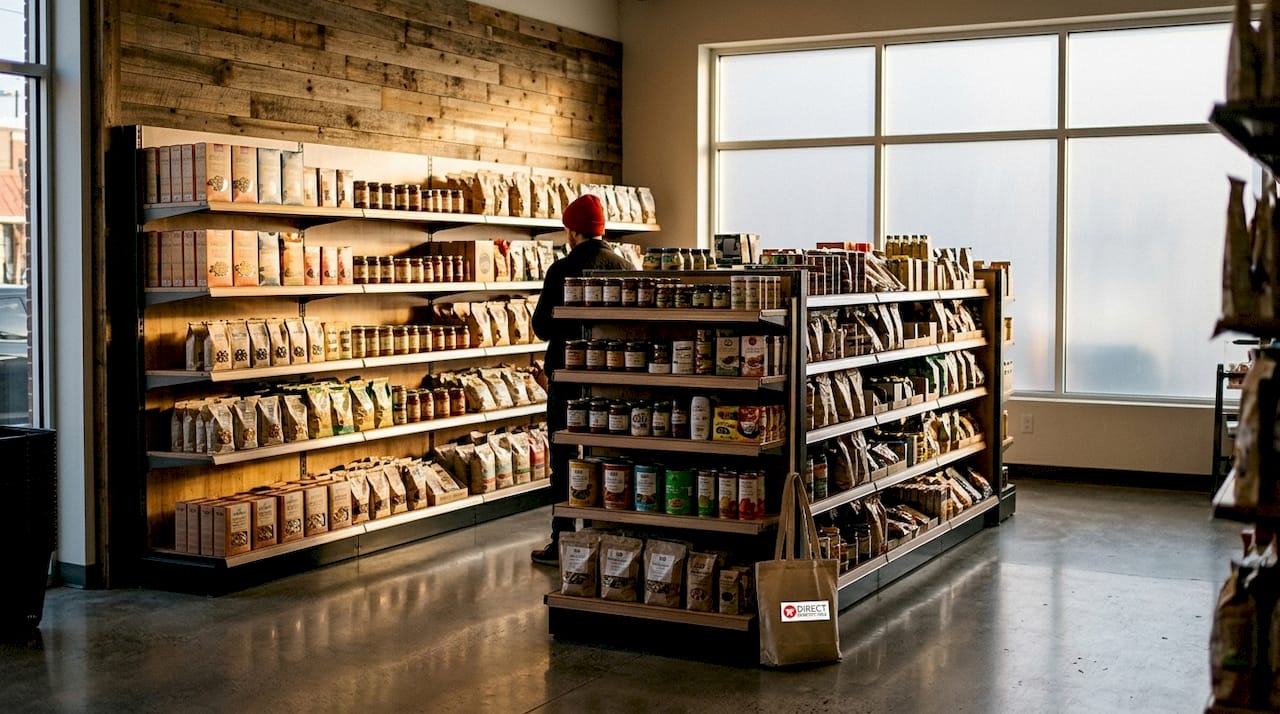
Wall gondolas are single-sided units fixed against or near the perimeter walls. They maximise vertical display space and work well for categories where shoppers expect to browse from floor to ceiling, such as beverages, cleaning products, or canned goods. Island gondolas are double-sided and freestanding, creating the central aisles that define most grocery and convenience store layouts.
Both types are built from modular bays, meaning you can extend, shorten, or reconfigure runs without replacing the entire system. Adjustable shelf brackets allow you to change shelf heights in minutes. Accessories including pegboards, hooks, wire baskets, and shelf dividers extend the range of products each unit can display.
Height is a critical variable. Standard gondola heights range from around 1,200mm for low-level units in convenience formats to 2,100mm or taller for full supermarket runs. Taller units maximise capacity but can create a closed-in feeling if aisle widths are not generous enough to compensate.
| Type | Configuration | Best Use Case |
|---|---|---|
| Wall gondola | Single-sided, perimeter placement | Destination categories, chilled goods, high-margin lines |
| Island gondola | Double-sided, freestanding centre aisle | General merchandise, impulse categories, promotional stock |
| Low-level gondola | Single or double-sided, 1,200mm height | Convenience stores, children’s product zones, checkout areas |
| Full-height gondola | Single or double-sided, 1,800–2,100mm | Supermarkets, DIY stores, large-format retail |
| Modular bay system | Adjustable shelves, interchangeable accessories | Any format requiring frequent product mix changes |
For a detailed look at how these units fit into a broader shopfitting plan, the retail shop shelving buyers guide from DirectShopfittings covers material choices, sizing, and configuration options in practical detail.
How to arrange gondola shelves for maximum impact
Arranging gondola shelves well is as much about customer comfort as it is about product visibility. Aisle clearance for gondola shelving in convenience stores should be at least 36 inches on primary paths and 42 inches on main entry lanes. Narrower aisles create friction, reduce browsing time, and frustrate customers carrying baskets or pushchairs.
Shelf depth and aisle width must be designed together. Deeper shelves hold more stock but push gondola faces closer to the opposite unit. If you increase shelf depth, you must widen the aisle to preserve the browsing experience. Failing to account for this is one of the most common layout mistakes in smaller stores.
Planograms map product placement across gondola bays according to shopper expectations and category logic. A planogram removes guesswork from shelf arrangement and maintains consistency across store resets. Lightspeed describes planograms as critical blueprints for translating fixtures into optimal product placement. Without them, staff make on-the-fly decisions that break presentation standards and confuse returning customers.
Short island gondola runs of three to five units create flexible break points that allow seasonal reconfiguration without disrupting the entire store layout. This approach is particularly effective in convenience and forecourt retail, where promotional windows change frequently.
Key layout considerations to keep front of mind:
- Map all fixed elements (doors, columns, service counters) before placing gondola runs
- Run island gondolas perpendicular to the main traffic flow, not parallel
- Position end caps to face the main aisle or checkout zone for maximum exposure
- Match planogram bay widths to your actual gondola bay sizes to avoid fixture inconsistency
- Leave wider clearance near entry points and checkout lanes to prevent congestion
Pro Tip: Review and reconfigure your gondola layout quarterly using sell-through data. Shifting shelf heights, swapping end cap products, and adjusting aisle widths in response to actual sales patterns consistently outperforms a static layout left unchanged for months.
What are the key benefits of gondola shelving for retailers?
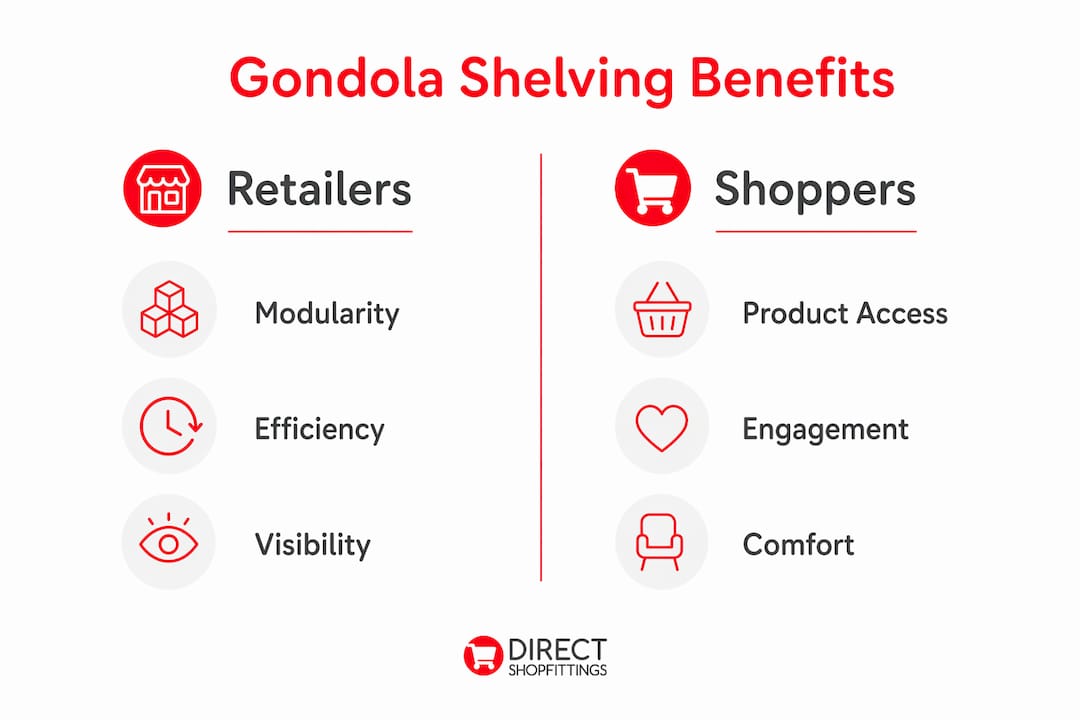
The commercial case for gondola shelving rests on modularity. Gondola bays, uprights, and shelves can be adjusted for product mix changes without dismantling entire runs. That means you can respond to a new supplier range, a seasonal promotion, or a category reset in hours rather than days.
Eye-level and end-bay placements serve impulse and browse shoppers, while lower shelves serve replenishment buyers who already know what they want. Assigning products to shelf levels based on shopper behaviour is a straightforward tactic that most independent retailers underuse. Putting your highest-margin lines at eye level and your bulk or value lines lower down is not complicated, but it requires a deliberate system.
Staff efficiency improves when gondola layouts are logical and consistent. Replenishment is faster when shelf positions are fixed by a planogram. Store resets take less time when modular bays can be adjusted without tools. Over a full year, these time savings add up to a meaningful reduction in labour costs.
| Benefit | Gondola Shelving | Fixed or Bespoke Shelving |
|---|---|---|
| Reconfiguration speed | Hours, no specialist tools needed | Days, often requires contractor |
| Product mix adaptability | High, adjustable shelves and accessories | Low, fixed positions limit flexibility |
| Initial cost | Moderate, competitive for modular systems | High, custom fabrication costs |
| Long-term value | Strong, units reused across resets | Limited, changes require new builds |
| Staff restocking efficiency | High, consistent bay logic | Variable, depends on original design |
For store owners setting up from scratch, the retail store opening equipment guide at DirectShopfittings outlines the full range of fixtures and fittings worth considering alongside gondola shelving systems.
Key takeaways
Gondola shelving is the single most versatile retail fixture available, and its layout directly determines how much of your product range customers actually see and buy.
| Point | Details |
|---|---|
| Gondola shelving is retail infrastructure | Treat it as a layout and merchandising tool, not just storage, to maximise sales. |
| End caps drive impulse purchases | Position high-margin or promotional lines on end caps facing main aisles or checkouts. |
| Aisle width and shelf depth are linked | Design both dimensions together to preserve navigability and browsing comfort. |
| Planograms maintain consistency | Use planograms to fix product placement and reduce on-the-fly rearrangement by staff. |
| Quarterly reviews improve performance | Adjust shelf heights and end cap products using sell-through data every three months. |
Why gondola layout deserves more strategic attention
I have seen retail managers spend considerable time and budget on signage, lighting, and point-of-sale materials while leaving their gondola layout unchanged for years. That is the wrong priority. The shelving layout is the skeleton of your store. Everything else sits on top of it.
The most common mistake I observe is treating gondola shelving as a capacity problem rather than a customer experience problem. Managers fill every available shelf position and push gondola runs as close together as the fire regulations allow. The result is a store that holds a lot of stock but sells less of it than it should, because customers feel crowded and stop browsing.
The stores that perform best tend to have slightly fewer gondola units than the maximum possible, wider aisles than strictly necessary, and end caps that change every four to six weeks. They use planograms consistently and review their layout against actual sales data rather than gut instinct. That discipline is what separates a well-run store from one that is always wondering why certain categories underperform.
Gondola shelving gives you the flexibility to make those adjustments without significant cost. The fixture itself is not the constraint. The thinking behind the layout is. If you are not reviewing your gondola arrangement at least quarterly, you are leaving sales on the table.
— Lee
Explore gondola shelving solutions from DirectShopfittings
DirectShopfittings supplies a full range of modular gondola shelving systems suited to independent retailers, convenience stores, and larger retail chains. Whether you need low-level units for a compact shop floor or full-height island gondolas for a supermarket-style layout, the range covers both standard configurations and specialist accessories including pegboards, hooks, and shelf dividers.
The team at DirectShopfittings can advise on gondola sizing, bay configurations, and layout planning to match your specific store dimensions and product mix. With rapid delivery times and a supplier network built for sourcing hard-to-find items, DirectShopfittings is a practical first stop for any retail shelving project. Visit DirectShopfittings to browse the full range of retail shelving solutions and request support from the team.
FAQ
What is gondola shelving used for in retail?
Gondola shelving is used to organise product display, guide customer movement, and create structured aisles in retail stores. It functions as both a storage system and a merchandising tool, with configurations ranging from perimeter wall units to double-sided island runs.
How wide should aisles be between gondola shelving?
Primary aisle clearance should be at least 36 inches in convenience stores, with main entry lanes at 42 inches or wider. Larger supermarket formats typically require broader clearances to accommodate trolleys and high footfall.
What is the difference between wall and island gondola shelving?
Wall gondolas are single-sided units placed against perimeter walls, suited to destination categories and chilled goods. Island gondolas are double-sided and freestanding, forming the central aisles used for general merchandise and impulse lines.
How often should gondola layouts be reconfigured?
Operators review fixture positioning quarterly using sell-through data to shift shelf heights and end cap products. Seasonal promotions and new product ranges are the most common triggers for more frequent adjustments.
What are planograms and why do they matter for gondola shelving?
A planogram maps product placement across gondola bays to maintain consistency and reflect shopper expectations. Accurate planograms prevent on-the-fly rearrangement by staff, which breaks presentation standards and reduces merchandising effectiveness.
Recommended
- Gondola Shelving Setup For Small Shops: 2026 Guide
- What Is A Retail Gondola Unit? A Store Owner’s Guide
- Retail Shop Shelving – Low Level General Shelving – Silver 9006 : Retail Shelving – Directshopfittings Ltd
- Retail Shop Shelving – Low Level General Shelving – Jura 9001 : Retail Shelving – Directshopfittings Ltd