
TL;DR:
- Trade show display stands are structural frameworks that help exhibitors showcase products, strengthen brand identity, and attract attendees. The ideal stand type depends on booth size, budget, and event goals, with options ranging from portable fabric displays to modular and custom systems. Emphasizing digital integration, sustainable design, and engaging layouts enhances impact and return on investment.
Trade show display stands are the physical and structural frameworks that exhibitors use to present products, communicate brand identity, and attract attendees at exhibitions and trade events. The right stand type directly determines whether your booth draws a crowd or gets overlooked. Choosing from the many types of trade show display stands available, including pop-up fabric displays, retractable banner stands, modular aluminium systems, and LED video walls, requires matching your selection to booth size, budget, and event goals. This guide covers every major exhibit display type, with practical guidance for event planners and marketing managers.
1. What are the main types of trade show display stands?
Booth layout is the first filter for choosing the right stand type. The four standard footprints are inline, corner, peninsula, and island, and each one demands a different approach to display stand options.
- Inline booths (10×10 or 10×20 feet) back against a wall and face a single aisle. Pop-up fabric displays, retractable banner stands, and tension fabric backdrops suit these spaces well. They are cost-effective and fast to assemble.
- Corner booths open on two sides, giving you greater visibility. A combination of a pop-up backdrop and a freestanding banner stand on the open side works effectively here.
- Peninsula booths (typically 20×20 feet) are open on three sides. These require modular systems with multi-sided graphics and integrated counters to maximise all three visible faces.
- Island booths (20×20 feet and above) sit in the centre of a hall with four open sides. Custom or modular builds with overhead signage, LED video walls, and engagement zones are standard here.
| Booth type | Best stand option | Key advantage |
|---|---|---|
| Inline (10×10) | Pop-up fabric backdrop | Fast setup, low cost |
| Corner (10×20) | Pop-up + banner stand | Two-sided visibility |
| Peninsula (20×20) | Modular aluminium system | Multi-sided branding |
| Island (20×20+) | Custom or full modular build | 360-degree impact |
Traffic flow and sightlines matter as much as the stand itself. An open layout with low-profile counters draws attendees in more effectively than a wall-to-wall display that blocks the view inside.
2. Portable display stands for small booths and quick setups
Portable displays like tension fabric backdrops and retractable banners are the go-to choice for 10×10 foot booths where speed and budget are the priority. They require no tools to assemble, pack into carry bags or wheeled cases, and can be set up by a single person in under 30 minutes.
The main portable stand categories are:
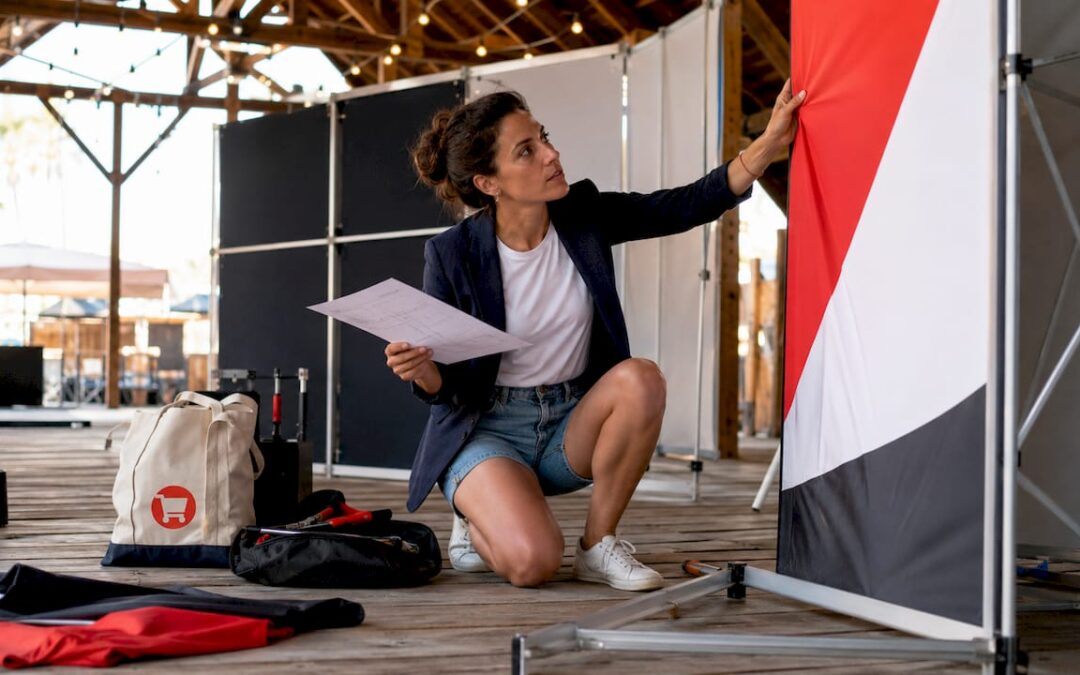
- Pop-up fabric displays: A collapsible frame covered with a printed fabric graphic. Curved and straight versions are available. Curved frames create a more immersive backdrop; straight frames pack flatter and suit tighter spaces.
- Retractable banner stands: A printed graphic that rolls up into a base unit. These are the most affordable portable option and work well as secondary signage alongside a larger backdrop.
- Tabletop displays: Compact versions of pop-up or tension fabric systems designed to sit on a table. Ideal for product demonstrations or small conference tables.
- L-shaped and U-shaped portable kits: Pre-packaged combinations of a backdrop, two side banners, and a counter. These give a small booth a complete, professional look without a large budget.
The main limitation of portable stands is longevity. Fabric graphics fade with repeated use, and lightweight frames can feel less premium than modular aluminium systems. For exhibitors attending more than four or five events per year, the cost of replacing graphics and frames often rivals the price of a modular system.
Pro Tip: When choosing between a curved and straight pop-up frame, opt for curved if your booth is a single inline space. The curve creates depth and draws the eye more effectively than a flat backdrop.
3. How modular and custom stands enhance brand impact
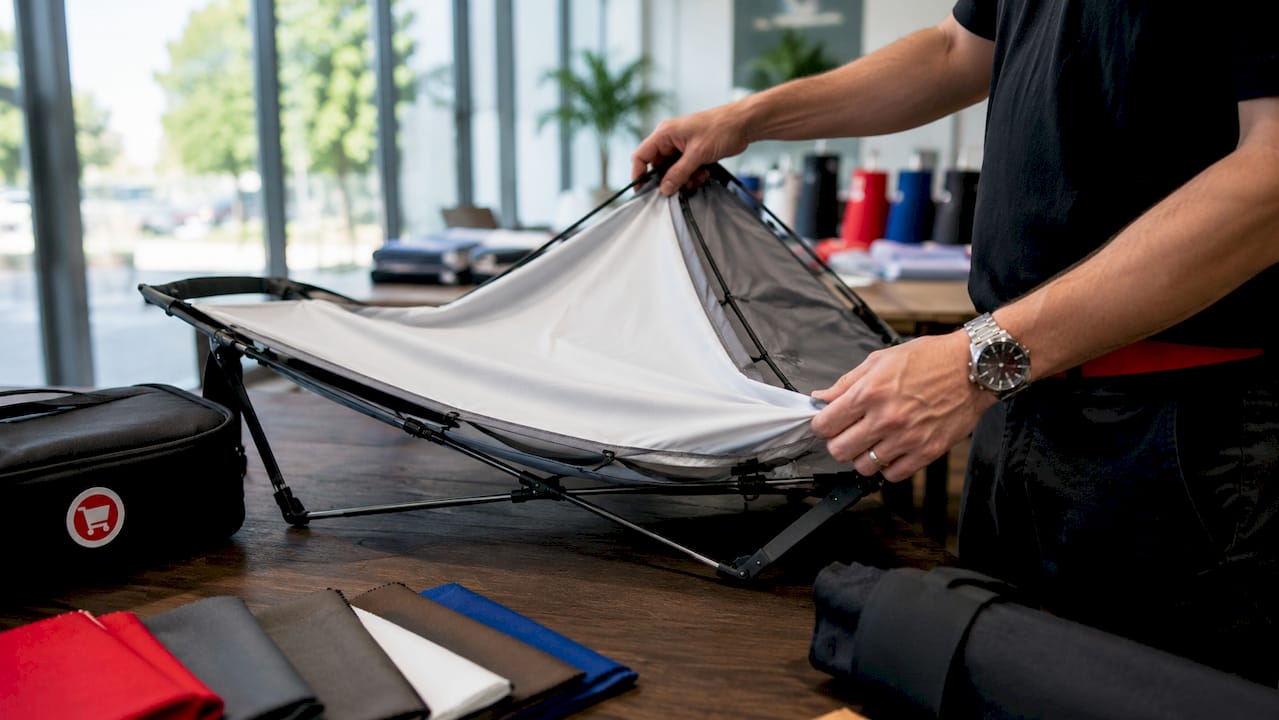
Larger footprints benefit from multi-sided, reconfigurable stands with integrated technology for visibility. Modular systems use aluminium extrusion frames that clip together without tools and accept interchangeable graphic panels, shelving, counters, and digital screens.
The core advantages of modular systems are:
- Scalability: The same frame components can be reconfigured from a 10×20 inline layout to a 20×20 island booth, reducing the need to purchase new hardware for each event.
- Digital integration: Modular frames accept SEG (silicone edge graphic) light boxes, LED video walls, and monitor mounts. High-definition digital displays are now considered standard in premium booths because they capture attention within seconds of an attendee passing by.
- Sustainability: Reusable aluminium frames reduce waste and lower the environmental cost of repeated exhibitions. Sustainability in stand design is now a measurable benchmark that affects both exhibitor ROI and brand perception.
Custom stands take modular principles further. Custom booths are pre-fabricated modular kits engineered for efficient onsite assembly within tight time frames. “Custom” does not mean built from scratch on the exhibition floor. It means bespoke components, designed around a specific brand identity, that arrive on site ready to assemble in a coordinated sequence.
A well-designed modular custom stand for a 20×20 island booth can be assembled by two people in four to six hours, compared to a full day or more for a traditionally built stand. That time saving translates directly into lower labour costs and less stress on your team.
For marketing managers planning global exhibition programmes, modular custom systems offer the best combination of brand consistency, portability, and reuse value.
4. Emerging trends in exhibit display types for 2026
The exhibition industry in 2026 is defined by three converging trends: digital integration, sustainable design, and experiential spatial planning. Each one affects which stand type delivers the best return.
Digital and LED integration is no longer optional for premium booths. SEG light boxes provide edge-lit fabric graphics with a clean, high-end finish. LED video walls deliver dynamic content that static graphics cannot match. Both technologies are now available as modular add-ons rather than bespoke installations, making them accessible to mid-budget exhibitors.
Sustainable design is moving from aspiration to requirement. Modular aluminium frames allow re-deployment across multiple events and reduce the volume of single-use materials. Many exhibition venues now ask exhibitors to demonstrate a sustainability plan as part of the booking process.
Experiential booth design is the most significant shift in trade show booth designs. Engagement zones such as lounges and bar areas within booths create deeper attendee connections than passive product displays. Visitors who sit down, interact with a product, or have a conversation stay longer and convert to leads at a higher rate.
Pro Tip: Replace at least one wall panel in your modular stand with an open engagement zone. A counter with seating and a screen showing product content consistently outperforms a closed-off display wall in terms of visitor dwell time.
Optimised sightlines and open layouts draw attendees in more effectively than dense, wall-to-wall displays. Negative space is a design tool, not wasted floor area.
5. How to choose display stands based on goals and budget
Choosing the best trade show displays comes down to five practical factors: booth size, event frequency, assembly resource, budget, and desired brand presence. Total cost of ownership, which includes shipping, storage, labour, and graphic updates, frequently exceeds the initial purchase price. Exhibitors who focus only on upfront cost often find that cheaper portable stands cost more over a two-year period than a mid-range modular system.
| Stand type | Upfront cost | Portability | Reuse value | Best for |
|---|---|---|---|---|
| Retractable banner | Low | Very high | Low | Supplementary signage |
| Pop-up fabric display | Low to medium | High | Medium | Small inline booths |
| Modular aluminium system | Medium to high | Medium | High | Frequent exhibitors |
| Custom modular build | High | Medium | High | Large island booths |
| LED video wall | High | Low | High | Premium brand presence |
Practical guidance by scenario:
- First-time exhibitor with a 10×10 booth: Start with a pop-up fabric backdrop and two retractable banner stands. Total outlay is modest, and the setup requires no specialist labour.
- Marketing manager attending six or more events per year: Invest in a modular aluminium system. The adaptability and lower long-term ownership costs justify the higher upfront price within the first two or three events.
- Brand launching at a major industry show: Commission a custom modular build with integrated SEG light boxes and an engagement zone. The visual impact and lead quality will outperform any portable alternative.
Pro Tip: When budgeting for a new stand, add 30% to the purchase price to account for shipping, storage, and first-year graphic updates. That figure gives you a realistic total cost of ownership from day one.
Avoid the common mistake of overlooking retail display errors that apply equally to trade show environments. Poor product placement and cluttered layouts reduce engagement regardless of how impressive the stand structure is.
Key takeaways
The most effective trade show display stand is the one that matches your booth footprint, event frequency, and brand goals, because misalignment between stand type and context costs you visibility and leads.
| Point | Details |
|---|---|
| Match stand to booth footprint | Inline suits portable stands; island booths require modular or custom builds. |
| Factor in total cost of ownership | Shipping, storage, and graphics often exceed the initial purchase price. |
| Prioritise digital integration | SEG light boxes and LED video walls capture attention within seconds at premium events. |
| Invest in modular for repeat events | Modular systems offer the best reuse value and adaptability for frequent exhibitors. |
| Design for engagement, not display | Open zones with seating and interactive content increase visitor dwell time and lead quality. |
What I have learned about trade show stand strategy
The conversation around trade show booth designs tends to focus on aesthetics. In my experience, the planners who get the best results focus on logistics first and visuals second.
The biggest mistake I see is treating a stand purchase as a one-off decision. A modular system bought with reconfiguration in mind will serve you across a dozen events. A cheap portable kit bought to save money in year one will cost you more in replacements, lost leads, and brand credibility by year two.
Technology is genuinely useful, but only when it serves a clear purpose. An LED video wall showing a looping brand video with no call to action is expensive wallpaper. The same screen showing a live product demonstration or a rotating case study pulls people in and gives your team something to talk about.
The shift towards experiential design is real and it matters. I have watched booths with half the floor space outperform larger neighbours simply because they had a comfortable place to sit and a reason to stay. Interactive engagement zones increase visitor dwell time and lead quality in ways that a printed graphic panel never will.
My practical advice: before you choose a stand type, write down the three things you want every visitor to do, feel, and remember. Then work backwards to the structure that makes those three things possible. The stand type follows the strategy, not the other way around.
— Lee
How DirectShopfittings can support your exhibition display needs
DirectShopfittings supplies retail and exhibition display equipment to businesses of all sizes, from independent boutiques to large retail chains. Their supplier network means they can source hard-to-find display components quickly, saving you time when deadlines are tight.
Whether you are setting up a trade show booth for the first time or upgrading an existing modular system, DirectShopfittings offers display and shopfitting solutions that translate directly to exhibition environments. Their product range covers shelving, display units, and retail fixtures that work as effectively on an exhibition floor as they do in a permanent shop. For a broader view of available retail floor fixtures that adapt well to trade show use, their buying guides are a practical starting point.
FAQ
What are the most common types of trade show display stands?
The most common types are retractable banner stands, pop-up fabric displays, modular aluminium systems, and custom-built stands. Each suits a different booth size and budget level.
Which display stand is best for a 10×10 booth?
Portable displays like tension fabric backdrops and retractable banners are the best choice for 10×10 booths. They assemble without tools, pack compactly, and keep costs low.
How do modular stands differ from custom stands?
Modular stands use standardised aluminium frames that reconfigure for different booth sizes. Custom stands use bespoke components designed around a specific brand, but are still built as pre-fabricated modular kits for efficient onsite assembly.
What is the total cost of owning a trade show stand?
Total cost of ownership includes shipping, storage, labour, and graphic updates, which frequently exceed the initial purchase price. Budget an additional 30% above the purchase price to cover first-year operational costs.
Are sustainable display stands worth the investment?
Yes. Reusable modular aluminium frames reduce waste and lower long-term costs across multiple events. Sustainability is now a measurable factor in exhibitor ROI and increasingly a requirement at major venues.