

A deli display case is a refrigerated merchandiser designed to keep deli foods such as sliced meats, cheeses, pasta salads, and prepared dishes chilled at safe serving temperatures while presenting them attractively to customers. For any retail business owner managing a deli counter, the right display case is the single piece of equipment that connects food safety compliance with sales performance. Modern units combine LED lighting, digital temperature controls, and configurable shelving to make products irresistible at a glance. Understanding the types, refrigeration methods, and key features available will help you choose a unit that works as hard as you do.
What are deli display cases and how do they work?
A deli display case, known in the trade as a refrigerated deli showcase or deli counter, maintains temperatures typically between -1°C and 5°C to keep products fresh without freezing them. That precise temperature band is not arbitrary. It sits at the boundary where bacterial growth slows dramatically, keeping sliced meats and prepared salads safe for display across a full trading day.
The case achieves this through a self-contained refrigeration system, usually housed beneath the display area or at the rear of the unit. Digital controllers allow staff to monitor and adjust the temperature without opening the case, which prevents warm air from disrupting the cold zone. LED lighting, positioned at the top and along shelves, illuminates products without generating the heat that older fluorescent tubes produced.
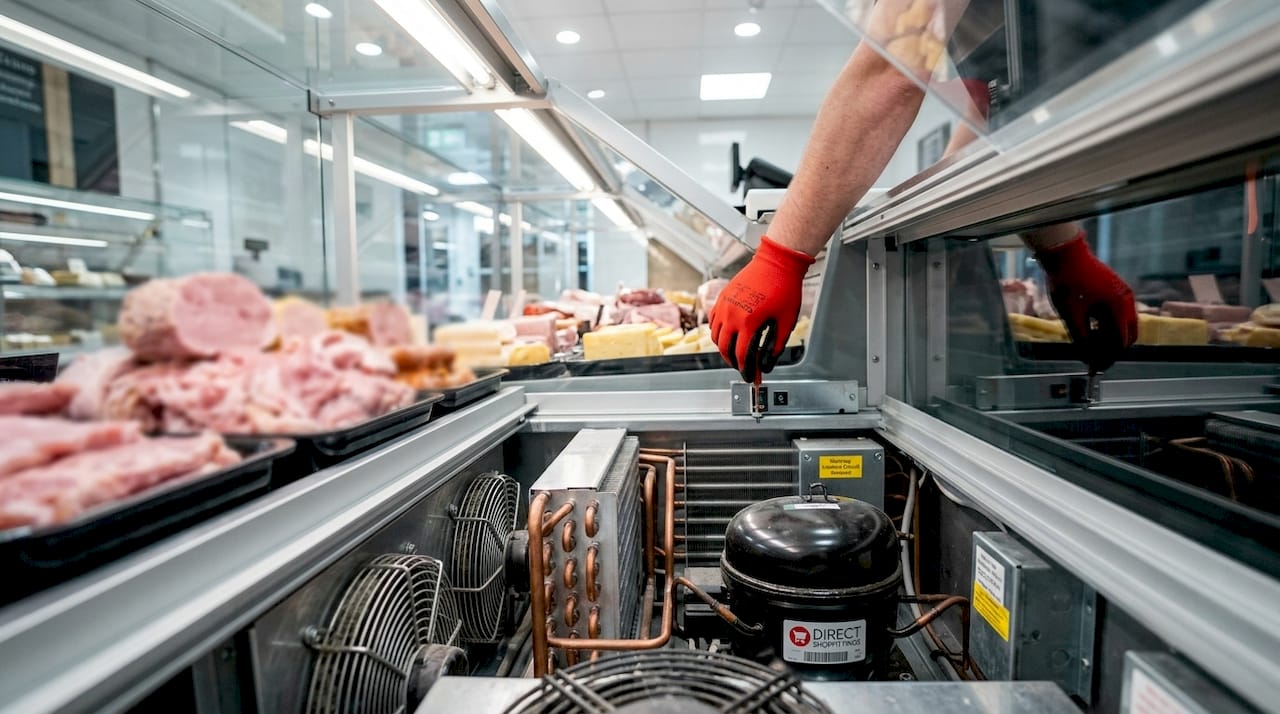
Deli cases and bakery cases look almost identical from the outside, which catches many buyers off guard. The critical difference lies in matching refrigeration capability and service style to the specific products you sell. Buying a bakery case for a deli counter is a common and costly mistake.
What are the main types and service styles of deli display cases?
Deli cases come in three primary service configurations, and the one you choose shapes everything from customer flow to food handling hygiene.
- Full-service cases feature rear-access doors that only staff can open. Customers view products through the glass and request items from an employee, who retrieves and portions them. This style suits premium delis where theatre and personal service are part of the brand.
- Open-air self-service cases have no front glass panel. Customers reach in directly to select pre-packaged items. These units work well for grab-and-go sections in supermarkets and convenience stores, where speed of purchase matters more than presentation depth.
- Self-service with lift-up front glass combines visibility with customer access. A hinged or sliding glass panel at the front allows customers to serve themselves while the case still maintains a degree of temperature control. These designs also support quick restocking during peak hours without disrupting the display.
Each configuration affects how your staff interact with the case, how quickly customers can make a purchase, and how rigorously you need to manage cross-contamination risks. Full-service cases offer the most control over food handling. Open-air cases demand that products are pre-packaged and labelled before display.
Pro Tip: If your shop serves both a lunchtime rush and a leisurely weekend crowd, consider pairing a full-service case for premium cuts with a self-service unit for pre-packaged items. You serve both customer types without slowing either down.
How do the refrigeration methods differ in deli display cases?
The two dominant refrigeration approaches are forced air and gravity coil, and the difference between them directly affects product quality, energy use, and operating cost.
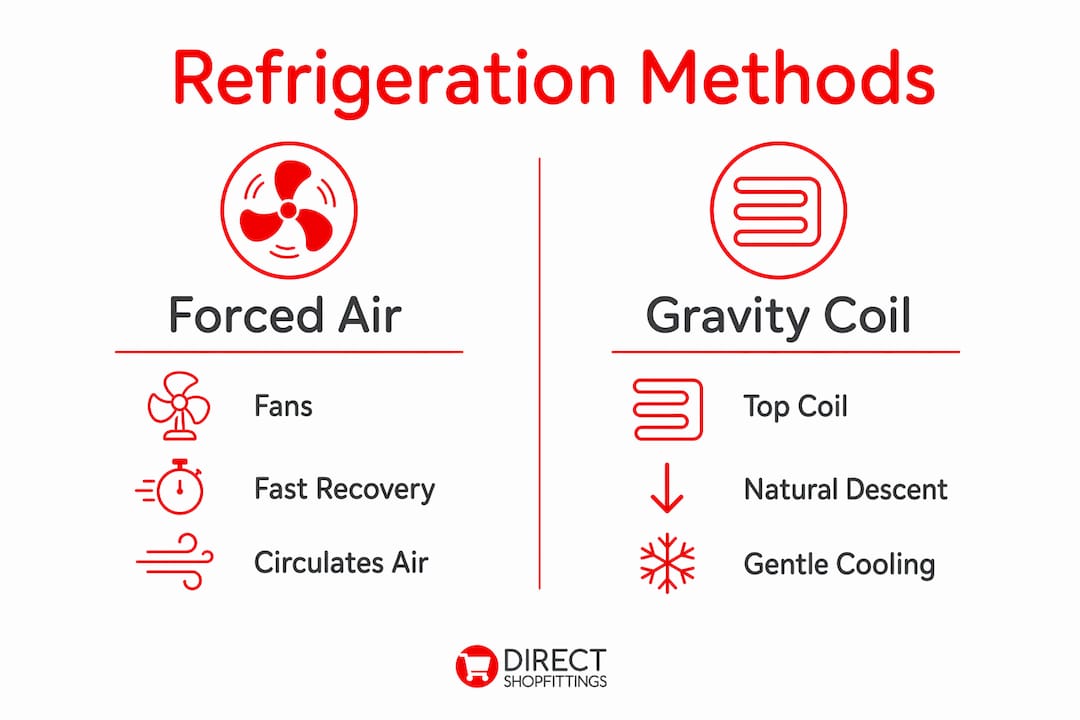
| Feature | Forced air | Gravity coil |
|---|---|---|
| Airflow method | Fans circulate cold air throughout the cabinet | Cool air drops naturally from a coil at the top |
| Cooling speed | Faster, more consistent temperature recovery | Slower, gentler cooling cycle |
| Effect on products | Can dry out exposed items over time | Preserves moisture in delicate products |
| Best suited for | Packaged goods, hard cheeses, robust items | Seafood, deli meats, salads, soft cheeses |
| Energy profile | Higher fan energy draw | Lower mechanical complexity |
Forced air systems use fans to push cold air around the cabinet, which recovers temperature quickly after the door opens. That speed is genuinely useful in a busy deli where staff open the case repeatedly throughout the day. The trade-off is that constant airflow accelerates moisture loss in exposed products, which can make sliced meats look dry and unappetising within hours.
Gravity coil refrigeration places the cooling coil at the top of the cabinet and allows cold air to descend naturally. There are no fans driving the process, so the air movement is gentle. This gentleness preserves moisture in seafood, soft cheeses, and dressed salads far better than a forced air system can. The limitation is that temperature recovery after door opening is slower, which matters less if your case is accessed infrequently.
Pro Tip: If you display a mix of packaged goods and exposed deli meats in the same case, choose gravity coil refrigeration and cover exposed products with a light film during slow periods. You will extend shelf life and reduce waste without investing in a second unit.
What features and design options should retailers consider?
The features built into a deli display case determine how easy it is to merchandise products, maintain the unit, and keep staff efficient. These are the specifications worth scrutinising before you commit to a purchase.
- Glass style. Curved glass reduces glare and reflections, giving customers a cleaner view of the product. Flat glass is simpler to clean and replace. Some curved models use hydraulic or tilt-forward mechanisms that make wiping down the interior far less awkward for staff.
- Lighting. LED top lighting and shelf-mounted LED strips illuminate products evenly without generating heat. Warm-toned LEDs (around 2700K to 3000K) make meats and cheeses look more appetising than cool white alternatives.
- Shelving. Adjustable glass shelving from brands such as Structural Concepts allows you to reconfigure the display for different product heights and seasonal ranges without tools.
- Rear access. Sliding rear doors give staff quick access for restocking and cleaning. Hinged doors are more common on smaller units but take up more floor space when open.
- Under-storage compartments. Some models integrate refrigerated storage beneath the display area, which keeps backup stock cold and close to hand. This reduces the number of trips to a back-of-house fridge during a busy service.
- Ventilation clearance. Every self-contained unit requires clear space around the intake and exhaust vents. Blocking these vents causes the compressor to overwork, raising energy costs and shortening the unit’s lifespan.
- Temperature display. A visible digital readout on the exterior lets managers check compliance at a glance without opening the case or consulting a separate thermometer.
Pairing your display case with complementary retail shop shelving around the counter creates a cohesive merchandising zone that guides customers naturally from ambient products to chilled ones.
What advantages do deli display cases offer retail business owners?
A well-chosen deli display case does more than keep food cold. It actively contributes to sales, compliance, and customer satisfaction in ways that are measurable from the first week of operation.
- Food safety compliance. Maintaining products at -1°C to 5°C satisfies UK food hygiene regulations for chilled storage and display. A case with a digital temperature log removes the need for manual temperature checks every two hours, saving staff time and creating an automatic audit trail.
- Increased impulse purchases. Products displayed at eye level behind clean, well-lit glass sell faster than the same products stored in a back-of-house fridge. Visibility converts browsers into buyers, particularly for premium items like artisan cheeses or marinated meats.
- Improved customer experience. A well-organised, attractively lit case signals quality to the customer before they read a single label. Pairing your display with restaurant-style signage that highlights signature products reinforces that quality message at the point of decision.
- Operational efficiency. Under-storage compartments and rear sliding doors reduce the time staff spend walking between the display and the stock room. During a lunchtime rush, those saved minutes translate directly into shorter queues.
- Energy savings. Modern self-contained units with LED lighting and high-efficiency compressors consume significantly less electricity than older open-top refrigerated counters. Over a three-year period, the energy saving often offsets a meaningful portion of the purchase cost.
Avoiding common retail display mistakes from the outset, such as overcrowding shelves or blocking sightlines, will amplify every one of these advantages from day one.
How to choose and install the right deli display case
Selecting the correct unit requires more than picking a size and a colour. Work through these steps before placing an order.
- Define your product range and service style. List every product category you plan to display. If you stock exposed deli meats alongside pre-packaged salads, you need a gravity coil unit or a case with separate temperature zones. If you run a self-service grab-and-go section, a lift-up front glass model will serve you better than a full-service counter.
- Measure your floor space accurately. Record the width, depth, and ceiling height of the intended location. Account for the space customers need to stand in front of the case and the clearance staff need behind it.
- Check ventilation requirements. Confirm specification measurements for intake and exhaust airflow clearance in the manufacturer’s data sheet before purchase. A unit installed too close to a wall will run hot and fail prematurely.
- Verify doorway dimensions. A case that cannot pass through your delivery entrance or internal doorways will cost you a return delivery fee and a delay. Measure every doorway between the delivery point and the installation site.
- Review the specification sheet in full. Check the electrical supply requirements, the refrigerant type, and the warranty terms. Some units require a dedicated circuit; others run on a standard 13-amp plug.
- Plan your floor layout before installation. Position the case so that it creates a natural customer journey through your shop. A deli counter placed at the rear of the store draws customers past other products, increasing the likelihood of additional purchases.
Pro Tip: Request a scaled floor plan from your supplier before delivery. Placing a paper template of the case’s footprint on your actual floor reveals clearance problems that measurements alone can miss.
Key takeaways
Choosing the right deli display case requires matching refrigeration method, service style, and physical specification to your product range and shop layout before you purchase.
| Point | Details |
|---|---|
| Temperature range matters | Cases operate between -1°C and 5°C; digital controls keep products safe and compliant. |
| Service style drives layout | Full-service, open-air, and lift-up glass configurations each suit different customer flow patterns. |
| Refrigeration method affects quality | Gravity coil preserves moisture in exposed meats and salads; forced air suits packaged goods. |
| Features determine efficiency | Adjustable shelving, LED lighting, and rear sliding doors reduce staff effort and improve display. |
| Installation needs pre-planning | Confirm ventilation clearance, doorway dimensions, and electrical supply before delivery. |
Why lighting and glass style matter more than most buyers realise
I have seen retailers spend weeks comparing compressor specifications and overlook the two features that customers actually respond to: the glass style and the lighting. A curved glass case with warm LED shelf lighting will outsell an identically stocked flat glass case with cool white top lighting, not because the food is different, but because the presentation signals freshness and quality at a subconscious level.
The other mistake I see repeatedly is buying the largest case that fits the space. A half-empty deli counter looks like a shop in decline. A smaller case, fully stocked and neatly arranged, looks abundant and well-managed. If your range grows, add a second unit rather than starting with one that dwarfs your current stock.
Gravity coil refrigeration is consistently underrated in buying guides that focus on cooling speed. For any retailer displaying exposed deli meats or dressed salads, the moisture preservation advantage is significant. Products look better for longer, waste drops, and the display needs less frequent attention from staff. That is a practical return on a specification choice that costs nothing extra to make if you know to ask for it.
Finally, adjustable shelving is not a luxury feature. It is the difference between a case that works for your current range and one that works for every range you will ever stock. Buy it once, configure it as often as you need.
— Lee
Find the right deli display case for your shop
If you are ready to invest in a deli display case that genuinely works for your retail operation, DirectShopfittings stocks a range of refrigerated display units suited to delis, farm shops, supermarkets, and specialist food retailers.
DirectShopfittings sources hard-to-find equipment through a supplier network built specifically for retail businesses, which means competitive pricing and fast delivery whether you are fitting out a single counter or an entire store. Their team can advise on unit specifications, ventilation requirements, and floor layout to help you get the installation right first time. Browse the full range of retail equipment and supplies at DirectShopfittings and find a deli display case that matches your product range, service style, and budget.
FAQ
What is a deli display case used for?
A deli display case is a refrigerated unit used to store and present deli products such as sliced meats, cheeses, salads, and prepared foods at safe serving temperatures between -1°C and 5°C. It combines food safety with product visibility to attract customers and support sales.
What are the main types of deli cases?
The three main types are full-service cases with rear employee access, open-air self-service cases, and self-service cases with a lift-up front glass panel. Each type suits a different retail environment and customer service approach.
Which refrigeration method is best for exposed deli products?
Gravity coil refrigeration is better for exposed deli products such as sliced meats and dressed salads because it circulates air gently without fans, preserving moisture and preventing products from drying out during display.
How much space do I need around a deli display case?
You must confirm the ventilation clearance requirements in the manufacturer’s specification sheet before installation. Insufficient clearance around the intake and exhaust vents causes the compressor to overwork, raising running costs and reducing the unit’s lifespan.
What features should I prioritise when buying a deli case?
Prioritise adjustable glass shelving, LED lighting, rear sliding doors, and a digital temperature display. These features improve product visibility, staff efficiency, and compliance monitoring without requiring significant additional investment.