

TL;DR:
- Retail display accessories include fixtures like shelf dividers, sign holders, and dump bins that enhance product visibility. These accessories influence shopper behavior by increasing product exposure and triggering unplanned purchases, ultimately boosting sales. Proper matching, installation, and maintenance of these tools are essential for store efficiency and revenue growth.
Retail display accessories are specialised fixtures and tools used to organise, showcase, and promote products within retail environments. Known in the industry as point-of-purchase merchandising hardware, these accessories range from simple shelf hooks and wire dividers to sign holders, dump bins, and countertop display units. Every retail professional needs to understand this category because the right accessories directly control product visibility, shopper flow, and ultimately, sales performance. This guide covers the main types, their behavioural impact, how to match them to your store format, and how to install and maintain them effectively.
What are retail display accessories and how are they categorised?
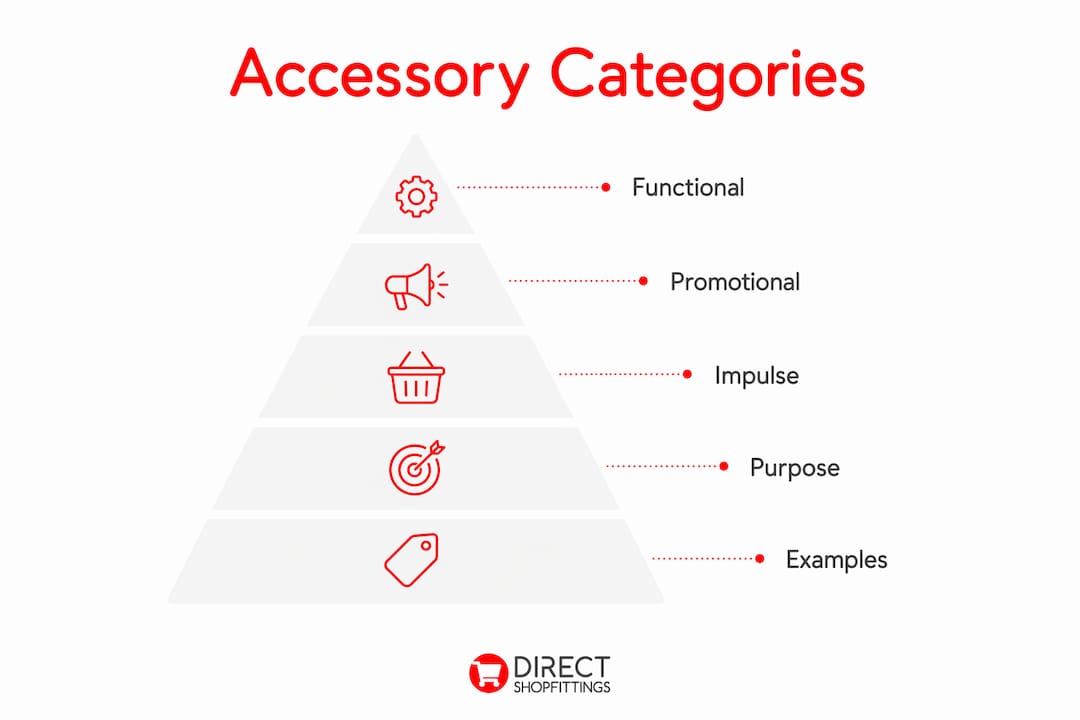
Retail display accessories are categorised broadly into three groups: functional hardware, promotional accessories, and impulse-purchase boosters. Each group serves a distinct merchandising purpose, and understanding the difference prevents costly mismatches between product type and display method.
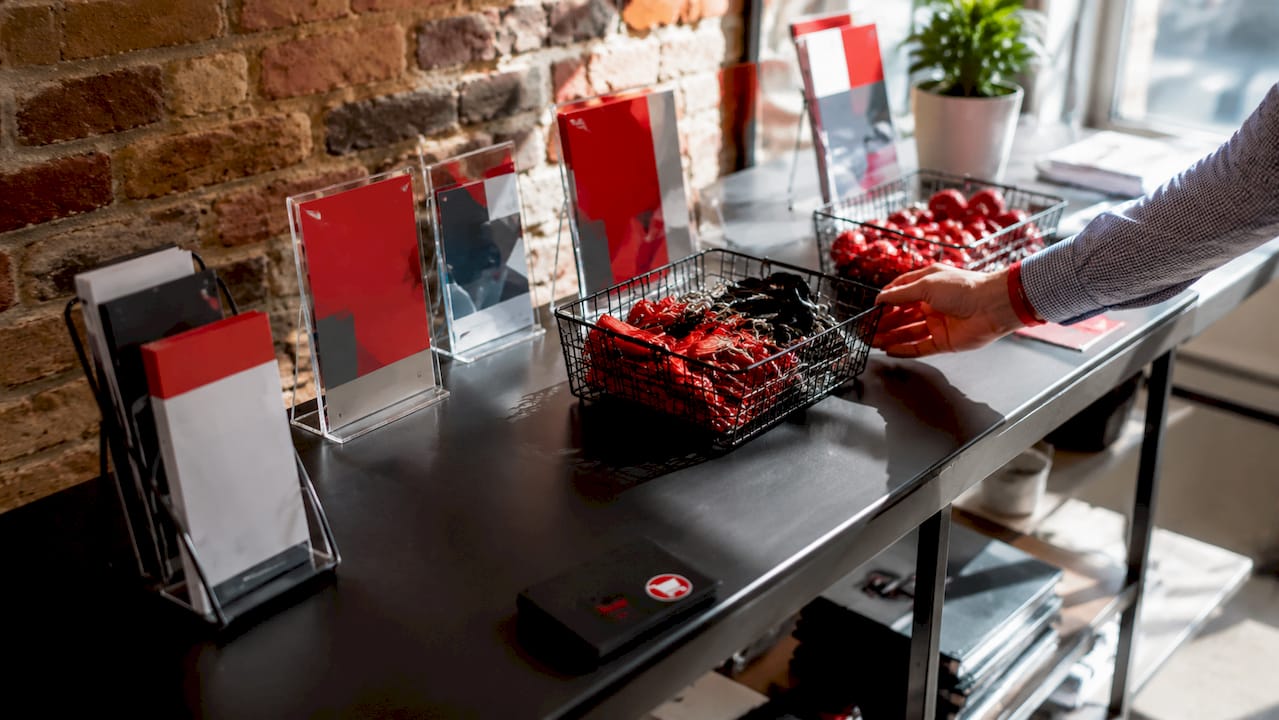
Functional hardware covers the physical tools that hold, separate, and organise stock on shelving systems. Hooks, shelf dividers, brackets, and facing tools all fall here. Their job is structural: keeping products upright, forward-facing, and accessible without constant staff intervention.
Promotional accessories communicate information and attract attention. Sign holders, shelf talkers, data strips, and price rails belong in this group. They sit at the point of decision, giving shoppers the price, offer, or product detail they need to commit to a purchase.
Impulse-purchase boosters are placed specifically to trigger unplanned buying. Countertop display units, dump bins, sidekick displays, and freestanding display units (FSDUs) sit in high-footfall zones such as endcaps, aisle junctions, and checkout areas. Their placement is deliberate and data-driven.
| Accessory type | Examples | Primary function |
|---|---|---|
| Functional hardware | Hooks, shelf dividers, brackets | Organise and face products on shelving |
| Promotional accessories | Sign holders, shelf talkers, data strips | Communicate price, offer, and product detail |
| Impulse-purchase boosters | Dump bins, countertop units, FSDUs | Trigger unplanned purchases in high-traffic zones |
Pro Tip: Match your accessory category to your merchandising goal first. If your priority is reducing staff labour on shelf tidying, invest in functional hardware. If your goal is driving add-on sales, focus budget on impulse boosters at the checkout.
How do display accessories influence shopper behaviour and sales?
Product placement controlled by display accessories has a measurable effect on revenue. Eye-level shelf placement can generate up to 35% more sales than bottom-shelf placement. That figure explains why planogram compliance, enforced through the right accessories, is treated as a commercial priority rather than a housekeeping task.
The mechanism behind this is product facing. Spring-loaded gravity feeders and T-shaped shelf dividers keep merchandise at the front of the shelf automatically, without staff needing to tidy between customer visits. This matters most in high-volume stores where shelves can look depleted within hours of opening. Accessories that maintain facing reduce that problem without adding labour costs.
Impulse triggering works differently. Point-of-purchase displays including shelf talkers, digital screens, and dump bins are placed in high-traffic areas like endcaps, aisles, and checkout zones to maximise exposure. The physical presence of a well-positioned dump bin, for example, interrupts the shopper’s path and prompts a decision that was never planned. That interruption is the entire commercial point.
| Accessory | Shopper behaviour influenced |
|---|---|
| Eye-level shelf dividers | Increases product visibility and selection rate |
| Gravity feeders | Maintains facing, reducing perception of low stock |
| Dump bins | Triggers unplanned purchase decisions |
| Shelf talkers | Provides price and offer detail at point of decision |
| Sidekick displays | Drives cross-selling by positioning related products together |
Pro Tip: Use sidekick displays to cross-sell complementary products. Position a sidekick carrying batteries next to a shelf of torches, or a unit carrying travel-size toiletries beside luggage accessories. The proximity alone increases basket size without any additional staff effort.
Retailers who understand how fixtures affect turnover treat accessory placement as a revenue decision, not a visual one.
Which accessories suit different retail environments?
The right accessory for a supermarket is rarely the right accessory for a pharmacy or a boutique clothing shop. Store format, product weight, traffic volume, and category all determine which tools perform best.
- Supermarkets and grocery stores: Wire shelf dividers clip onto gondola shelving without tools and keep products separated and forward-facing, reducing staff workload during busy trading periods. Gravity feeders work well for canned goods and bottled products. Data strips and price rails run along shelf edges to display pricing clearly at scale.
- Convenience stores and forecourt retail: Countertop display units suit confectionery, gum, and small impulse lines near the till. Dump bins work for promotional stock in the main aisle. Space is limited, so accessories must be compact and easy to reposition.
- Pharmacies and health retailers: Wire dividers maintain planogram compliance for boxed medicines and supplements. Sign holders and shelf talkers communicate dosage or product information clearly. Acrylic display units protect higher-value items while keeping them visible.
- Department stores and fashion retail: FSDUs allow suppliers to create branded product destinations on the shop floor. Freestanding display units enable tight control over product presentation and can be repositioned for seasonal resets without structural changes.
- Seasonal and promotional environments: Temporary cardboard POP displays last 6–8 weeks and suit short-term campaigns. They cost less than permanent fixtures and can be disposed of cleanly at the end of a promotion.
Material choice matters as much as accessory type. Retail display accessories are predominantly constructed from metal, wood, wire, and acrylic, each suited to different load requirements and visual styles. Metal and wire suit high-traffic, high-volume environments. Acrylic and wood suit premium or boutique settings where aesthetics carry more weight. Matching material to environment prevents premature wear and keeps displays looking presentable throughout their lifespan.
For retailers planning a new store layout, the retail fixtures guide for new stores provides a useful starting point for matching fixture types to floor plans.
How to install, maintain, and get the most from display accessories
Installation errors are the most common reason display accessories underperform. A sign holder placed at knee height communicates nothing. A shelf divider installed on the wrong pitch leaves products loose and untidy. Getting the basics right from the start saves significant time later.
- Plan before you install. Map your planogram before touching any accessories. Know which products sit where, at what height, and in what quantity. Accessories should serve the planogram, not the other way around.
- Install functional hardware first. Fit hooks, dividers, and brackets before adding promotional elements. Wire shelf dividers clip onto gondola shelving without tools, making them quick to position and reposition. Start at eye level and work outward.
- Position sign holders at decision height. Shelf talkers and sign holders should sit at the front edge of the shelf, at the height where shoppers naturally look. Anything below waist height loses most of its impact.
- Check facing after every restock. Gravity feeders reduce this task, but accessories without spring mechanisms need manual checking. Build a facing check into the end-of-shift routine rather than treating it as optional.
- Audit accessories against the planogram monthly. Accessories drift. Dividers get moved, sign holders get removed, and dump bins get repositioned by staff without authorisation. A monthly audit catches these changes before they affect sales data.
- Replace damaged accessories promptly. A cracked acrylic holder or a bent wire divider signals poor store standards to shoppers. Keep a small stock of replacement parts for the accessories you use most frequently.
Avoiding common retail display mistakes during setup is as important as the installation itself. Overcrowding shelves, mismatching accessory size to product dimensions, and ignoring traffic flow patterns are the three errors that appear most consistently in underperforming displays.
Pro Tip: Run a planogram audit every four weeks rather than waiting for a seasonal reset. Small accessory shifts accumulate quickly and can misalign your display from the intended layout within a single trading month.
Key takeaways
Retail display accessories fall into three distinct categories, and matching the right category to your merchandising goal is the single most important decision you will make when fitting out or refreshing a retail space.
| Point | Details |
|---|---|
| Three core categories | Functional hardware, promotional accessories, and impulse boosters each serve a different merchandising purpose. |
| Eye-level placement drives sales | Products positioned at eye level can generate up to 35% more sales than those placed at floor level. |
| Facing tools reduce labour | Gravity feeders and T-shaped dividers keep products front-facing automatically, cutting manual shelf tidying. |
| Match material to environment | Metal and wire suit high-traffic stores; acrylic and wood suit premium or boutique retail settings. |
| Monthly audits protect performance | Planogram drift happens quickly; a four-week audit cycle catches accessory misalignment before it affects revenue. |
What I have learned from watching retailers get this wrong
Retailers consistently underestimate how much the choice of accessory affects the shopper’s perception of the entire store. I have walked floors where the product range was genuinely strong but the display accessories were so mismatched, so poorly maintained, or so obviously chosen on price alone, that the merchandise looked cheap by association. A bent wire divider or a faded shelf talker does not just look untidy. It signals to the shopper that the retailer does not care, and that signal transfers directly to the product.
The most common mistake I see is treating functional hardware and promotional accessories as interchangeable budget lines. They are not. Functional hardware is an operational investment. It reduces labour, maintains compliance, and protects margin over months and years. Promotional accessories are a short-term communication tool. Conflating the two leads to under-investment in the functional layer and over-spending on promotional materials that get thrown away after six weeks.
The other pattern worth naming is the reluctance to remove accessories that are no longer serving a purpose. An empty sign holder, a dump bin with three units rattling around in it, or a sidekick display carrying the wrong product category all actively damage the shopping experience. Editing your accessory setup is as important as adding to it.
The retailers I have seen get this right treat their display accessories the way a good editor treats a manuscript. They cut what is not working, reinforce what is, and review the whole thing on a regular cycle. That discipline, more than any single product choice, is what separates a well-merchandised store from one that merely has stock on shelves.
— Lee
How DirectShopfittings supports retailers with display accessories
DirectShopfittings supplies the full range of retail merchandising accessories that this guide covers, from wire shelf dividers and gondola hooks to sign holders, countertop display units, and specialist shopfitting hardware.
Whether you run a single convenience store or manage a multi-site retail operation, DirectShopfittings sources hard-to-find items quickly through its supplier network, saving you time and reducing procurement costs. The team advises on accessory selection based on store format, product category, and traffic volume. For retailers starting from scratch, the shopfitting guide for small retailers is a practical first step. For those expanding an existing setup, the retail shelving buyers guide covers shelving and accessory compatibility in detail. DirectShopfittings delivers promptly across the UK with a customer service record that reflects its commitment to getting orders right first time.
FAQ
What are retail display accessories?
Retail display accessories are fixtures and tools used to organise, present, and promote products within a retail store. They include functional items like shelf dividers and hooks, promotional tools like sign holders and shelf talkers, and impulse-purchase boosters like dump bins and countertop display units.
How do shelf dividers improve store performance?
Wire shelf dividers keep products separated, forward-facing, and organised on gondola shelving, reducing the need for manual tidying by staff. They clip on without tools and help maintain planogram compliance in supermarkets, pharmacies, and general merchandise stores.
What is the difference between a shelf talker and a sign holder?
A shelf talker is a small printed card attached directly to the shelf edge to highlight a product or promotion at the point of decision. A sign holder is a freestanding or clip-on frame that holds larger printed signage and can be repositioned across different fixtures.
How long do temporary POP displays last?
Temporary cardboard point-of-purchase displays last 6–8 weeks and are designed for seasonal or short-term promotional use. They cost less than permanent fixtures but are not suited to high-traffic environments where durability is a priority.
Which materials are best for retail display accessories?
Metal and wire accessories suit high-traffic, high-volume retail environments because of their durability. Acrylic and wood are better suited to premium or boutique settings where visual presentation carries more commercial weight than load capacity.