

TL;DR:
- Modular display systems are reusable frameworks that retailers assemble and reconfigure without specialist help. They reduce costs by 30% to 60% compared to custom builds and enable quick graphic updates in under 20 minutes. Proper storage, staff training, and a refresh schedule are essential to maximize their long-term value.
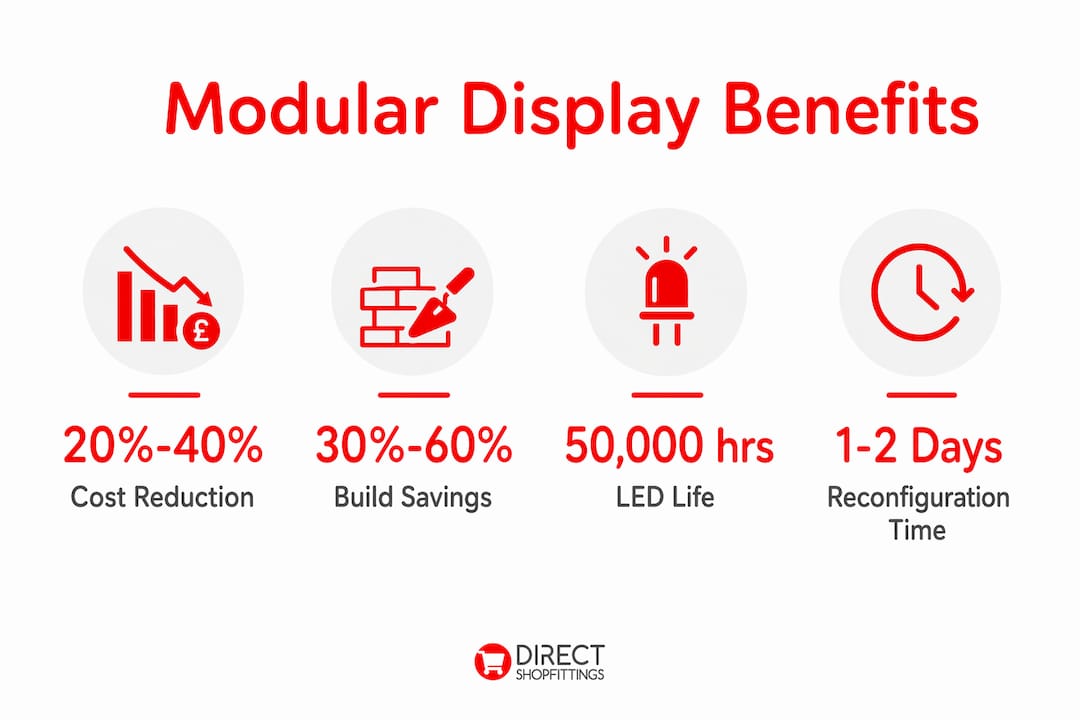
Modular display systems are defined as reusable, interlocking framework solutions that retailers assemble, reconfigure, and personalise without specialist tradespeople. The case for choosing them is straightforward: modular systems cost 30%–60% less than bespoke custom builds across multiple campaigns. That gap widens every time you refresh a promotion or refit a section of the shop floor. For retail professionals weighing up their next display investment, the total cost of ownership tells a far more compelling story than the price tag on day one.
Why use modular display systems: the core benefits for retailers
Modular display system benefits fall into four clear categories: cost efficiency, operational flexibility, sustainability, and brand presentation. Each one compounds the others, which is why the business case strengthens the longer you use the format.
Cost efficiency
Businesses report a 20%–40% reduction in operational expenses when they switch from fixed to modular displays, with return on investment typically achieved within 18–24 months for frequent users. That figure reflects lower labour costs, reduced shipping volume, and the elimination of repeat joinery work. Fixed installations require a carpenter every time you move a wall panel. Modular systems do not.
Flexibility and scalability
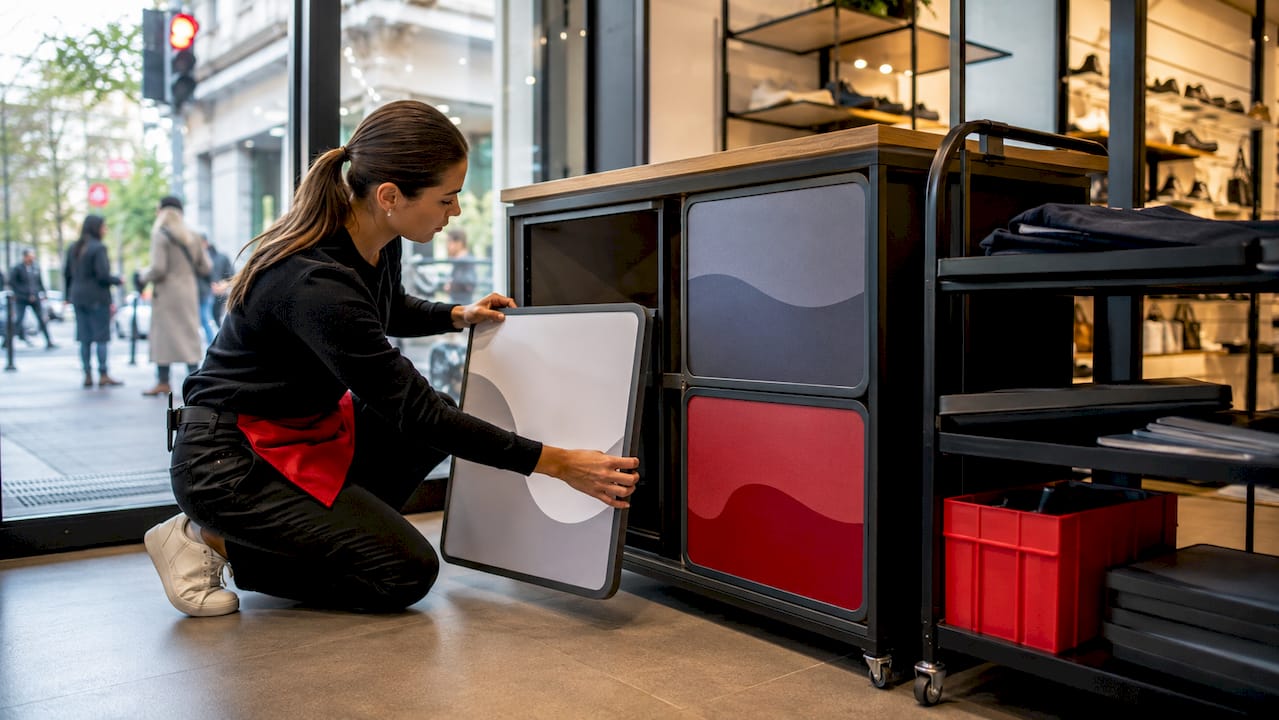
The same component inventory can create configurations ranging from a compact counter display to a full island unit. Retailers can scale up for a seasonal peak and scale back down without ordering new stock. This is particularly valuable for businesses operating across multiple locations, where one shared inventory serves several stores.
Sustainability
Modular systems extend component lifespan and reduce waste compared to fixed installations, aligning with ISO 9001 quality management standards and corporate sustainability goals. Fewer skips, less demolition, and reusable panels all contribute to a measurably lower environmental footprint. For retailers with sustainability commitments, this is not a secondary benefit. It is a primary one.
Brand presentation
Modular display solutions give retailers a consistent visual identity across formats. Graphic panels, lightboxes, and shelving modules all carry the same brand language. When a campaign changes, the graphics change. The structure stays.
Pro Tip: Invest in a small stock of spare graphic panels for your most frequently updated zones. Swapping them out takes minutes and keeps your floor looking current without a full refit.
How do modular systems improve in-store space utilisation?
Space utilisation is where modular display solutions earn their keep on a daily basis. A fixed shelving run locks you into one layout. A modular shelving system lets you test three layouts in a month and keep the one that sells more.
Reconfiguring for campaigns and seasons
Modular systems enable rapid deployment and reconfiguration within 1–2 days, scaling easily from small to large configurations using the same inventory. A retailer running a summer promotion can shift floor fixtures to create a feature zone on monday morning and return the layout to standard by friday afternoon. That kind of agility is simply not possible with fixed joinery.
LED lightboxes and silicone-edge graphics
Modern modular lightbox systems use high-efficiency LEDs rated for up to 50,000 hours, with graphic panels updated via silicone-edge graphics (SEG). SEG frames grip a printed fabric graphic along a recessed channel, creating a taut, backlit image with no visible fixings. Staff can replace graphic panels in under 20 minutes without tools. That means a campaign refresh no longer requires a contractor or a closed store.
Visual merchandising flexibility
Modular shelving and display cabinets let you control sightlines, product groupings, and customer flow. You can raise or lower shelf heights, add or remove gondola bays, and reposition feature displays without touching the fabric of the building. For a practical overview of how different fixture types affect layout decisions, the retail shelving layout guide from DirectShopfittings covers the key principles in detail.
Pro Tip: Use modular displays to run A/B tests on your shop floor. Set up two different product groupings in adjacent zones for two weeks each, then measure which one converts better. You get live market data without any additional spend.
How do modular systems compare to traditional fixed displays?
The comparison between modular and fixed retail displays is not simply about upfront price. It is about what each format costs you over three to five years of operation.
Modular systems reduce the need for bespoke joinery, cutting upfront labour and installation costs significantly. Operational expenses also fall because reconfigurations do not require demolition or carpentry. A fixed display that needs moving generates waste, contractor fees, and downtime. A modular unit generates none of those.
The table below compares the two formats across the attributes that matter most to retail decision-makers.
| Attribute | Modular displays | Fixed or bespoke displays |
|---|---|---|
| Upfront cost | Lower | Higher |
| Reconfiguration cost | Minimal, in-house | High, requires contractors |
| Deployment time | 1–2 days | Days to weeks |
| Graphic update speed | Under 20 minutes (SEG) | Requires new build or panel |
| Sustainability | High, reusable components | Low, high waste on changes |
| Scalability | High, same stock, multiple configs | Low, fixed to original design |
One misconception worth addressing directly: modular does not mean generic. Total cost of ownership is the correct metric for this decision, and when you factor in graphic quality, LED lighting, and branded finishes, a well-specified modular system is indistinguishable from a bespoke build to the average shopper. The difference is that you can change it next month without calling a joiner.
Modular systems also support branding in commerce more effectively than fixed builds, because the brand identity lives in the graphics and lighting rather than the structure. Change the campaign, keep the system.
What should retailers consider when choosing modular display systems?
Choosing the right modular display solution requires more than picking a product from a catalogue. The operational context matters as much as the specification.
- Storage space. Modular components need a home when they are not on the floor. Allocate dry storage space from the outset, and plan for the full inventory, not just what you are using today.
- Labelling and organisation. Organised storage and standardised labelling of modular components are critical for efficient in-house assembly and rapid store setups. Without a clear system, components get lost or damaged, and the time savings disappear.
- Staff training. Tool-less assembly is only fast if your team knows the system. A one-hour training session per member of staff pays back in the first reconfiguration.
- Scalability across locations. Multi-site retailers should standardise on one modular system across all stores. The same components then serve as a shared pool, reducing total inventory and simplifying ordering.
- Balancing aesthetics with flexibility. Custom-printed graphics, branded colour finishes, and premium LED lightboxes all sit within a modular framework. You do not have to choose between looking high-end and being operationally agile.
For retailers new to the category, the retail display fixture types guide from DirectShopfittings provides a useful grounding in the options available before you commit to a system.
Modular systems also support rapid marketing pivots. Marketing teams can adjust messaging quickly with modular stands, making them a practical tool for testing seasonal campaigns or reacting to competitor activity. For retailers running frequent promotions, this agility is a genuine commercial advantage. Pairing modular display updates with seasonal campaign planning creates a joined-up approach to in-store and digital marketing.
Key takeaways
Modular display systems deliver lower total cost of ownership, faster reconfiguration, and stronger brand consistency than fixed builds, making them the better long-term investment for most retail businesses.
| Point | Details |
|---|---|
| Cost savings are substantial | Modular systems cost 30%–60% less than bespoke builds across multiple campaigns. |
| Reconfiguration is fast | Staff can update SEG graphic panels in under 20 minutes without tools or contractors. |
| Sustainability is measurable | Reusable components reduce waste and align with ISO 9001 quality standards. |
| Storage organisation is non-negotiable | Labelled, dry storage for all components is essential to maintain the time-saving benefits. |
| Total cost of ownership wins | Fixed displays appear cheaper upfront but cost significantly more over three to five years. |
What I’ve learned from watching retailers get this wrong
Most retailers who struggle with modular displays make the same mistake: they treat the system as a one-off purchase rather than a managed asset. They buy the components, set them up once, and then leave them untouched for eighteen months because nobody owns the process of updating them.
The retailers who get real value from modular systems are the ones who build a simple refresh calendar. They schedule graphic updates to coincide with campaigns, assign a member of staff to own the display inventory, and treat the floor layout as something that changes, not something that is fixed. That shift in mindset is worth more than any individual product specification.
The other thing I would push back on is the assumption that modular means compromise on aesthetics. The best modular lightbox systems, with high-quality fabric graphics and LED backlighting, look exceptional. Shoppers do not see the frame. They see the image. If your graphics are strong, your display is strong.
The practical advice I would give any retail buyer is this: start with one zone, measure the result, and then roll out. Do not try to refit the whole store at once. The learning curve on storage and assembly is real, and it is much easier to manage on a small scale first. Once your team is comfortable, scaling to additional zones or locations is straightforward. The types of retail fixtures guide is a good starting point for understanding what sits alongside modular systems in a well-planned store.
— Lee
DirectShopfittings and modular display solutions for retail
DirectShopfittings supplies retail businesses of all sizes with the shopfitting equipment and display solutions needed to build flexible, well-presented shop floors. From shelving modules to display cabinets, the range covers the components that underpin a modular approach to retail merchandising.
For retailers starting out or looking to rethink their current setup, the shopfitting guide for small retailers on the DirectShopfittings website explains the fundamentals clearly and without jargon. The team is also available to advise on product selection and sourcing for specific requirements, including hard-to-find components. DirectShopfittings combines competitive pricing with fast delivery and a supplier network built for retail professionals who need the right equipment without delays.
FAQ
What are modular display systems?
Modular display systems are reusable, interlocking display frameworks that retailers assemble and reconfigure without specialist tradespeople. They include components such as shelving modules, lightboxes, and graphic panel frames.
How much do modular display systems save compared to bespoke builds?
Modular systems cost 30%–60% less than bespoke custom builds across multiple campaigns, with businesses reporting a 20%–40% reduction in operational expenses and ROI typically within 18–24 months.
How quickly can graphic panels be updated on modular displays?
Staff can replace silicone-edge graphic (SEG) panels in under 20 minutes without tools, making campaign refreshes fast and cost-free in terms of contractor fees.
Are modular display systems suitable for small retailers?
Modular systems scale from compact counter displays to full island configurations using the same component inventory, making them practical for small boutiques and large retail chains alike.
What is the biggest operational risk with modular display systems?
Poor storage organisation is the primary risk. Without labelled, dry storage for all components, assembly becomes slow and components get damaged, which erodes the time and cost savings the system is designed to deliver.