

TL;DR:
- Open shelving replaces enclosed cabinetry in boutiques, increasing visual space, stock density, and customer interaction. It boosts sales by enabling tactile engagement, reducing retrieval time, and enhancing perceived luxury through curated displays. Proper styling, zoning, and strategic use of open and closed storage maximize operational efficiency and sales potential.
Open shelving in boutiques is defined as a retail display strategy that replaces enclosed cabinetry with accessible, wall-mounted or freestanding shelves, placing merchandise in direct view and reach of every customer. The open display shelves benefits are measurable: vertical space increases stock density, visual barriers disappear, and customers engage with products physically rather than peering through glass. Research confirms that tactile product interaction triggers the Endowment Effect, raising purchase likelihood by up to 80%. For boutique owners and designers weighing why use open shelving boutiques, the answer sits at the intersection of spatial efficiency, customer psychology, and brand identity.
Why use open shelving in boutiques to maximise space?
Space is the most expensive asset in any boutique. Open shelving advantages begin the moment you redirect stock from floor-level cabinets to vertical wall runs. Wall-mounted display shelving enables urban boutiques to increase inventory capacity without expanding floor area. That matters enormously in city-centre locations where every square metre carries a premium rent.
The spatial gains are not limited to raw storage. Open shelving creates a visual expansion effect, making a 10 × 12-foot space feel 15–20% more spacious by eliminating visual barriers and allowing freer light flow. Removing solid cabinet fronts enhances depth perception, which makes customers feel less crowded and more inclined to browse. A boutique that feels airy sells more than one that feels cramped.
Vertical space is the most underused asset in small retail. Most boutiques fill the floor and ignore the wall above shoulder height. A well-planned retail shelving layout uses tiered wall shelving from mid-height to ceiling, reserving the floor for customer movement and focal displays.
Key spatial benefits of open shelving include:
- Increased stock density without additional floor fixtures
- Improved customer flow through wider aisles and fewer obstructions
- Better natural and artificial light distribution across the sales floor
- Reduced visual clutter at eye level, directing attention to featured products
- Flexibility to reconfigure displays seasonally without major shopfitting work
Pro Tip: Place your highest-margin products at eye level on open shelves. Research confirms that eye-level placement triggers impulse decisions faster than any other position in the store.
How does open shelving affect customer experience and engagement?
Open shelving removes the single biggest barrier between a customer and a purchase: the need to ask for help. When products sit behind glass or inside locked cabinets, customers must interrupt their browsing to request access. That friction kills impulse purchases. Open display shelves eliminate it entirely.
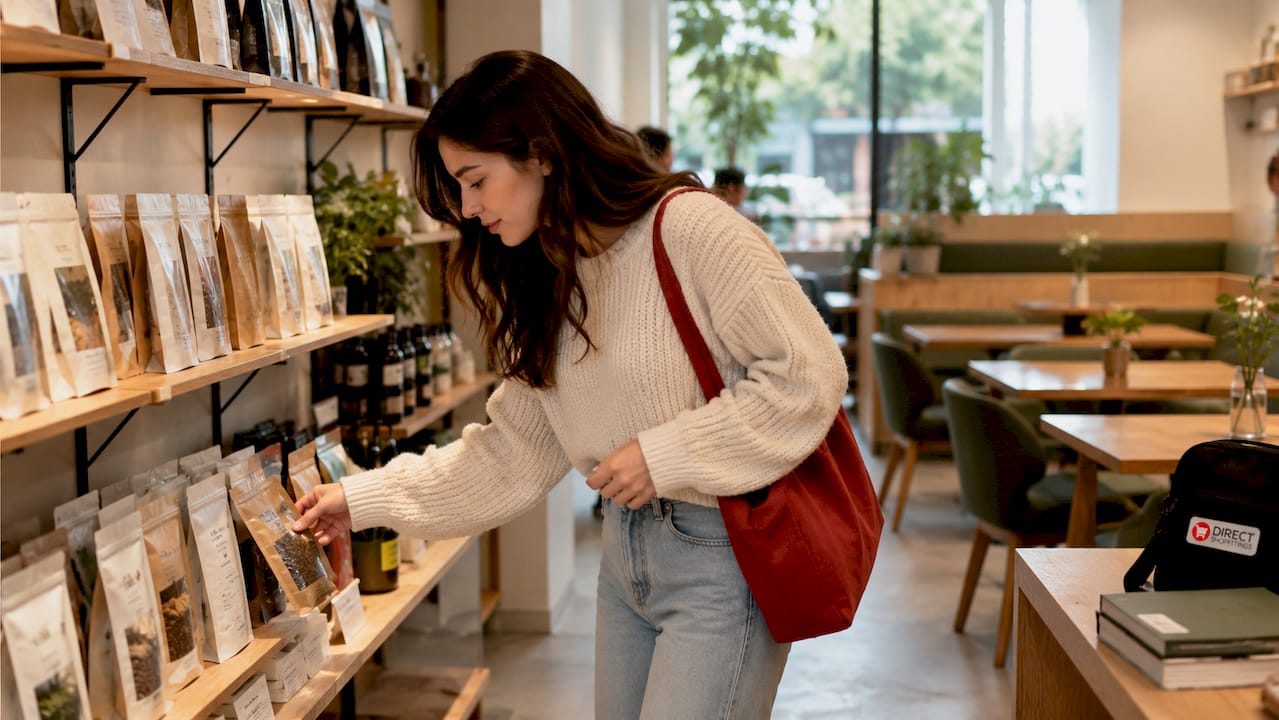
The operational gains are equally significant. Replacing cabinet-style storage with open shelving reduces item retrieval time by 4–10 seconds per item. Staff who perform 30–50 retrievals per session save 10–15 minutes of cumulative time each week. That time returns to the shop floor as customer service.
The deeper benefit is psychological. The Endowment Effect is a well-documented cognitive bias: once a person physically handles an object, they begin to feel partial ownership of it. Physical interaction with products on open shelves increases purchase likelihood by up to 80%. This effect is especially powerful for tactile products such as knitwear, ceramics, candles, and accessories. Boutiques selling these categories gain a direct sales advantage from open shelving.
Open shelving also reduces cognitive load. A boutique that resembles a curated art gallery allows customers to process inventory effortlessly. When products are visible, organised, and accessible, customers spend less mental energy navigating the space and more time considering purchases.
Key customer engagement benefits include:
- Tactile access that triggers the Endowment Effect and raises purchase intent
- Reduced staff dependency for product retrieval, freeing time for genuine service
- Lower cognitive load through clear sightlines and organised displays
- Impulse purchase triggers from eye-level product visibility
- Perceived luxury when negative space and curation signal quality over quantity
Pro Tip: Group complementary products together on open shelves. A customer who picks up a candle is far more likely to notice and purchase the matching diffuser placed directly beside it.
How to style open shelving in boutiques for maximum impact
Styling is where open shelving either builds a brand or undermines it. The most common mistake boutique owners make is treating open shelves as additional storage rather than as a display medium. Overcrowding open shelves destroys the minimalist, luxury-focused aesthetic and turns displays chaotic and visually cheap. Shallow shelf depth and curated negative space focus customer attention on individual products rather than on the fixtures holding them.
Effective open shelving ideas for boutiques follow a clear set of design principles:
- Limit products per shelf. Treat each shelf as a vignette. Three to five items per run is a reliable starting point. Negative space is not wasted space. It is the visual signal that tells customers each item is worth their attention.
- Vary heights and textures. Mix tall and short items, smooth and textured surfaces. This creates visual rhythm that draws the eye along the shelf rather than stopping at the first item.
- Use a consistent colour palette. Products grouped by colour or tone create an immediate sense of curation. This is a technique borrowed from gallery display and works equally well in fashion, homeware, and beauty boutiques.
- Combine open shelving with closed cabinetry. Balancing open shelves with closed storage maintains functionality while adding visual layering. Closed units hold back-stock and sensitive items; open shelves carry the display.
- Create a Discovery Zone. Position a dedicated section of open shelving near the entrance or at a natural pause point in the customer journey. This zone invites tactile engagement and introduces new or featured products. The funnel effect strategy uses open shelving for discovery and locked cases to signal exclusivity for premium items.
Decorating with open shelving also means thinking about the shelf material itself. Timber shelves read as warm and artisanal. Powder-coated steel reads as contemporary and minimal. The fixture should reinforce the brand, not contradict it. Reviewing a retail shop shelving buyers guide before purchasing helps boutique owners match material, load capacity, and finish to their specific brand aesthetic.
Pro Tip: Audit your open shelves every Monday morning. Visible shelves motivate higher display standards and better inventory turnover. A five-minute reset at the start of each week keeps the display intentional rather than accidental.
What are the operational limits of open shelving in retail?
Open shelving is not the right solution for every product category. The operational case for open shelves depends entirely on what sits on them. Open shelving works best for durable, high-trial products with dirt-resistant packaging. Fragile, oxidation-sensitive, or high-value items placed on open shelves increase operational costs and risk product loss.
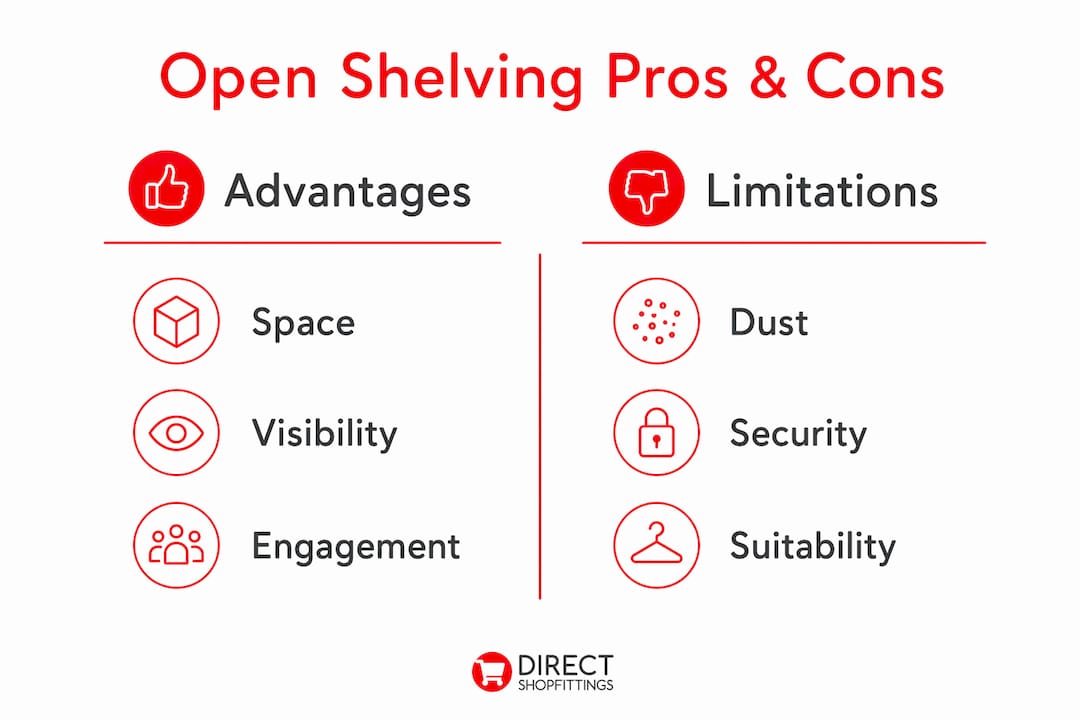
Boutique owners should zone their retail space according to product suitability. The table below outlines a practical framework for deciding which products belong on open shelves and which require closed or secured storage.
| Product type | Recommended display method |
|---|---|
| Knitwear, accessories, ceramics | Open shelving. High tactile value, durable, benefits from handling. |
| Candles, skincare testers, stationery | Open shelving. Low damage risk, impulse purchase drivers. |
| Fine jewellery, watches, luxury leather | Closed, locked cabinetry. High theft risk, requires controlled access. |
| Fragile glassware, oxidation-sensitive cosmetics | Closed cabinetry or acrylic cases. Damage and contamination risk. |
| Back-stock and bulk inventory | Closed storage or stockroom. Not for customer-facing display. |
Dust accumulation is a genuine operational concern for open shelving. Products on open shelves require more frequent cleaning than those in closed units. Boutiques with high footfall and open shelving should build a daily wipe-down into their opening routine. For guidance on hybrid display cabinet options that combine open and closed elements, DirectShopfittings provides a detailed 2026 guide covering materials, configurations, and load ratings.
Theft is the other operational risk. Open shelving increases product accessibility for customers, which is the point. It also increases accessibility for shoplifters. Boutiques should position open shelving within clear sightlines of the till and use retail sourcing and inventory strategies that account for shrinkage when planning open display zones. High-value items should never sit on open shelves without a staff member in direct line of sight.
Key takeaways
Open shelving is the most effective display strategy for boutiques when products are durable, tactile, and suited to customer handling, and when displays are curated with deliberate negative space rather than filled to capacity.
| Point | Details |
|---|---|
| Vertical space drives capacity | Wall-mounted open shelving increases stock density without expanding floor area. |
| Tactile access raises sales | The Endowment Effect means customers who handle products are up to 80% more likely to buy. |
| Overcrowding kills the aesthetic | Limit products per shelf and use negative space to signal quality and curation. |
| Zone products by suitability | Reserve open shelves for durable, high-trial items and use closed storage for fragile or high-value stock. |
| Hybrid layouts balance function and brand | Combining open shelving with closed cabinetry protects sensitive stock while maintaining visual appeal. |
Open shelving in 2026: what I have learned from boutique retail
The conversation around open shelving has shifted. Five years ago, the debate was aesthetic: does it look good? Today, boutique owners ask a sharper question: does it sell? My answer, based on watching dozens of retail fit-outs, is that open shelving sells when it is treated as a display discipline rather than a storage shortcut.
The boutiques I have seen get it right share one habit. They edit relentlessly. They remove products from shelves rather than add them. They treat every shelf as a considered statement about what their brand values. The ones that struggle do the opposite. They fill every available surface and then wonder why customers walk past without stopping.
The other thing I have noticed is that open shelving changes staff behaviour. When the display is visible to everyone, the team takes more ownership of it. A messy closed cabinet is invisible. A messy open shelf is a public statement. That accountability, uncomfortable as it sounds, is actually a management tool.
Looking ahead, the boutiques investing in modular open shelving systems are the ones best positioned to adapt quickly. Seasonal resets, new product launches, and changing brand direction all require flexible fixtures. Rigid, built-in cabinetry locks you into a layout. Well-chosen open shelving does not.
— Lee
Open shelving solutions from DirectShopfittings
DirectShopfittings supplies boutique owners and retail designers with shelving fixtures built for display-led retail environments. The range covers wall-mounted open shelving, modular systems, and hybrid units that combine open display with closed storage, all available with rapid delivery and competitive pricing.
Whether you are fitting out a new boutique or reconfiguring an existing space, the retail shop shelving buyers guide at DirectShopfittings covers materials, load ratings, and configuration options in practical detail. For owners starting from scratch, the retail store opening equipment guide walks through every fixture category you need before opening day. DirectShopfittings sources hard-to-find items through its supplier network, saving boutique owners both time and cost on specialist display requirements.
FAQ
What are the main benefits of open shelving in a boutique?
Open shelving increases vertical storage capacity, improves product visibility, and triggers the Endowment Effect by allowing customers to handle merchandise directly. These factors combine to improve customer flow and raise purchase intent.
How does open shelving compare to closed cabinetry for boutiques?
Open shelving suits durable, high-trial products and creates a more accessible, visually open environment. Closed cabinetry protects fragile or high-value items and signals exclusivity. Most effective boutiques use both in a zoned layout.
What products should not go on open shelves?
Fragile items, oxidation-sensitive products, and high-value goods such as fine jewellery are better suited to closed or locked display cases. Open shelves increase handling risk and theft exposure for these categories.
How do I avoid my open shelving looking cluttered?
Limit products to three to five items per shelf run and use deliberate negative space between them. Shallow shelf depth and a consistent colour palette reinforce a curated, premium appearance rather than a crowded one.
Does open shelving work for small boutiques with limited floor space?
Open shelving is particularly effective in small boutiques because it moves stock onto walls rather than the floor. Wall-mounted systems increase inventory capacity without reducing the customer browsing area.