

TL;DR:
- Shadow boxes are three-dimensional display cases that enhance product visibility and perceived value in retail. They focus shopper attention by isolating items with depth, creating a premium impression that drives impulse purchases. Proper placement, clear spacing, and regular maintenance maximize their effectiveness, especially in small retail settings.
Shadow boxes are specialised three-dimensional display cases designed to protect, highlight, and elevate products in retail environments. Unlike standard shelves or flat frames, they create a controlled stage around each item, using depth and enclosure to draw the eye and signal value. The question of why use shadow boxes retail display comes down to one core principle: shoppers buy what they notice, and shadow boxes make products impossible to ignore. Used correctly, they reduce visual clutter, protect stock, and lift perceived product quality without requiring a full shop refit.
What are the main benefits of shadow boxes in retail displays?
Shadow boxes act as silent salespeople, using structural depth to break through shelf clutter and drive impulse purchases. Products placed at eye level inside a shadow box are significantly more likely to be picked up and converted to a sale. That single placement decision can change the entire commercial performance of a product line.
The benefits of shadow boxes extend well beyond visibility. Here is what they deliver for small retailers:
- Protection from dust and handling. An enclosed shadow box keeps products clean and untouched, reducing shrinkage and damage from browsing customers.
- UV protection. UV-protective glazing can block up to 99% of harmful rays, preventing fading and material degradation over time. For retailers selling textiles, artwork, or premium goods, this is a genuine stock-preservation tool.
- Elevated perceived value. Enclosing a product signals that it is worth protecting. Shoppers read that signal instantly and adjust their price expectations upward.
- Brand positioning. A well-chosen shadow box communicates quality before a customer reads a single label. It is a physical expression of your brand standard.
- Reduced visual noise. Isolating products within a box removes competing visual information, making it easier for shoppers to focus on what matters.
Pro Tip: Place shadow boxes at eye level in high-traffic zones, particularly near checkout counters or entrance displays. Products positioned at eye level are far more likely to trigger an impulse purchase than those placed below waist height.
Retailers who want to understand how shadow boxes fit within a broader display cabinet strategy will find that shadow boxes occupy a distinct niche: they are feature-focused, not storage-focused.

How do shadow boxes improve shopper engagement and buying behaviour?
Visual isolation is the most powerful psychological tool a shadow box provides. When a product sits alone inside a framed, three-dimensional space, the brain treats it as significant. This is the same principle that galleries use to hang single paintings on large walls. Retailers can apply it at counter level.
“Successful brands use shadow boxes to end visual clutter, making displays cleaner and focusing shopper attention on select high-value items. Depth in a shadow box is a psychological trigger for prestige. Inadequate clearance undermines perceived product quality and value.”
The Rule of Clearance is the governing principle here. Maintaining at least 10mm of space between the product and the glass creates three-dimensional depth perception. It also prevents the display from looking cramped, which shoppers associate with low quality. The rule is simple but widely ignored, and ignoring it costs retailers in perceived prestige.
Lighting compounds the effect. Retailers often light their shops attractively at room level but neglect the product itself. Shadow boxes solve this by creating a controlled lighting environment where accent lighting reveals true texture and colour. Shoppers perceive material quality more accurately, which reduces purchase hesitation.
To apply these principles effectively, follow this sequence:
- Select a hero product. Choose one item per shadow box. A single product with space around it reads as premium. Multiple items read as a jumble sale.
- Apply the Rule of Clearance. Set at least 10mm between the product and the glass on all sides.
- Add accent lighting. Direct a focused light source onto the product, not the box itself.
- Position at eye level. Mount the box so the product sits at the average adult eye line, roughly 150–160cm from the floor.
- Review weekly. Dust, reposition, and assess whether the hero product is still the right choice for that location.
Pro Tip: Avoid placing shadow boxes where natural daylight creates glare on the glass. Glare blocks the view and negates every other advantage the display offers. Side-lit or overhead-lit positions work best.
What practical tips should small retailers know when using shadow boxes?
Small retailers often make the mistake of treating shadow boxes like ordinary shelves. They are not. Each box should have a singular, clear role in your retail shelving layout, and that role should be defined before the box goes up.
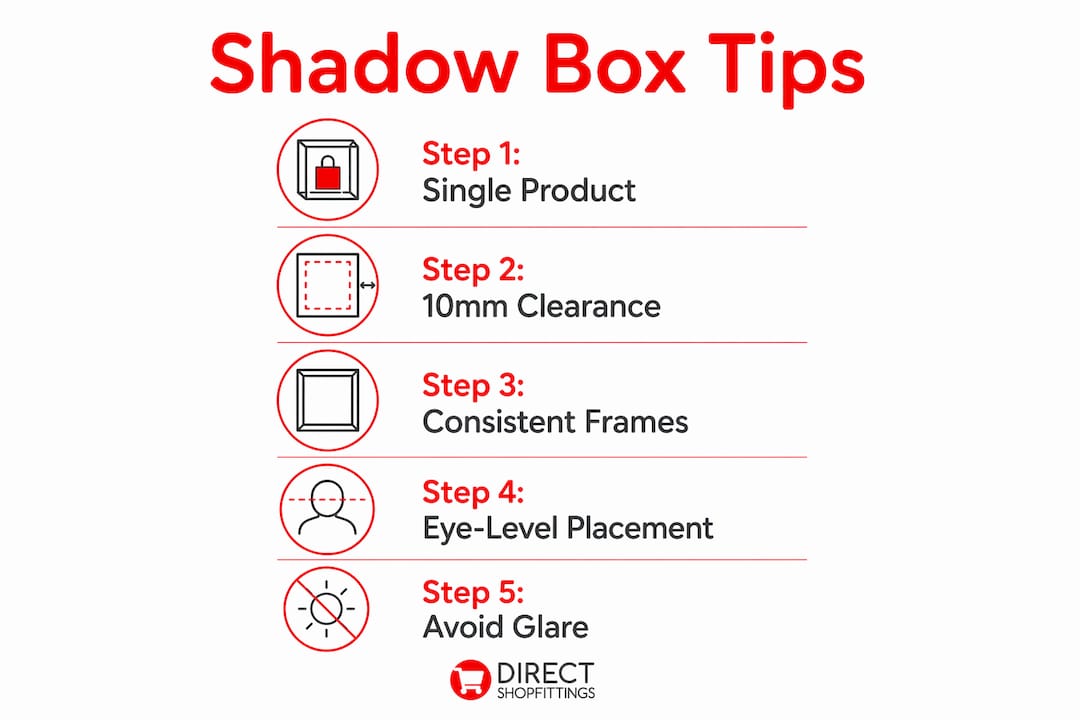
The most effective shadow box displays avoid overcrowding and are placed in hero zones with clear product roles. Cluttered hero zones reduce effectiveness and make the display look like storage rather than presentation. Each box should require no dismantling to restock, so plan your mounting and access points before installation.
Practical guidance for small retailers:
- Sizing matters. Choose a box that gives the product room to breathe. A box that is too small forces the product against the glass, violating the Rule of Clearance and reducing perceived quality.
- Material selection. Opt for reinforced mounting and thick mouldings for heavier items. Thin frames sag over time, which signals poor quality to shoppers even if the product inside is excellent.
- UV-protective glazing. Specify UV glass for any product that fades, including dyed textiles, printed packaging, and natural materials. Standard glass offers no meaningful protection.
- Maintenance schedule. Clean the glass weekly. Fingerprints and dust on the exterior destroy the premium effect immediately.
- Coordinate lighting. Integrate shadow box lighting with your overall retail lighting scheme so the display feels intentional, not bolted on.
Pro Tip: Use a consistent frame finish across all shadow boxes in a single zone. Mixing finishes fragments the visual identity of the display and reduces the premium signal each box sends individually.
Common retail display mistakes in small stores often come down to overcrowding and poor placement. Shadow boxes are the fastest fix for both problems when used with discipline.
What are current trends in shadow box retail merchandising?
Shadow boxes are evolving beyond single-product frames. Retailers in 2026 are integrating them into broader visual merchandising systems that combine storytelling, vertical display, and multi-functional fixtures.
| Trend | Application | Benefit |
|---|---|---|
| Tiered vertical displays | Stacking shadow boxes at varying heights along a wall | Uses vertical space efficiently and creates visual rhythm |
| Branded storytelling frames | Custom-printed backdrops inside the box | Reinforces brand identity without additional signage |
| Multi-functional display units | Shadow boxes combined with storage drawers below | Reduces floor space needed while maintaining a feature display |
| Interchangeable inserts | Removable backing panels in seasonal colours | Allows fast visual refresh without replacing the entire fixture |
| Counter-level shadow boxes | Small boxes positioned on sales counters | Drives impulse purchases at the point of payment |
Retail layouts incorporating verticality through tiered displays and shadow boxes can increase store sales by 20–40% when traffic patterns and product placement are managed properly. That figure reflects the combined effect of better product visibility, improved shopper flow, and reduced visual noise. Shadow boxes contribute to all three.
Branded storytelling is the trend with the most untapped potential for small retailers. A custom backdrop inside a shadow box costs very little but transforms a generic display into a brand statement. A jeweller, for example, can use a velvet-lined box with the brand name embossed on the backing to create a display that reads as boutique rather than budget.
Counter-level shadow boxes deserve particular attention. The benefits of counter displays for shop owners are well documented, and shadow boxes amplify those benefits by adding enclosure and focus to the point-of-payment moment.
Key takeaways
Shadow boxes are the most effective single fixture for lifting perceived product value, reducing visual clutter, and driving impulse purchases in small retail environments.
| Point | Details |
|---|---|
| Visual isolation drives sales | One product per box, with space around it, signals premium quality and focuses shopper attention. |
| Rule of Clearance is non-negotiable | Maintain at least 10mm between product and glass to create depth and preserve perceived prestige. |
| UV glazing protects stock | UV-protective glass blocks up to 99% of harmful rays, preventing fading in textiles and printed goods. |
| Placement determines performance | Eye-level positioning in high-traffic zones maximises impulse purchase rates significantly. |
| Vertical and branded displays are growing | Tiered shadow box layouts combined with custom backdrops increase sales and reinforce brand identity. |
What I have learned from watching shadow boxes work in real retail spaces
The most common mistake I see small retailers make is buying a shadow box and then filling it with three products because the space “looks empty.” That instinct kills the display. The emptiness is the point. It is what tells the shopper that the item inside is worth their attention.
I have watched the same product sit unnoticed on an open shelf for weeks, then sell consistently within days of being moved into a shadow box at eye level. The product did not change. The context did. That is the entire argument for shadow boxes in retail, and no amount of discounting or signage replicates it.
The second mistake is neglecting the glass. A fingerprint-smeared shadow box does more damage to brand perception than no display at all. Retailers who commit to weekly cleaning see the results in their sales data. Those who do not wonder why the display stopped working.
My honest recommendation: start with one shadow box in your highest-traffic zone, apply the Rule of Clearance, add a focused light source, and review it after four weeks. The sales data will tell you everything you need to know about whether to expand the approach.
— Lee
How DirectShopfittings can help you get your displays right
Small retailers who want to move from open shelving to feature displays need the right fixtures from the start. DirectShopfittings supplies a full range of retail display equipment designed for boutiques and independent shops, including display cases, counter units, and shelving systems that work alongside shadow box installations.
The DirectShopfittings supplier network sources hard-to-find items quickly, which matters when you are fitting out a shop to a deadline. Their team is known for responsive service and fast delivery, so you are not waiting weeks for fixtures that should be on the floor earning their keep. Whether you are setting up your first display or refreshing an existing layout, the retail display fixture range at DirectShopfittings gives you practical options at competitive prices.
FAQ
What is a shadow box display in retail?
A shadow box is a three-dimensional enclosed display case that uses depth and framing to isolate and highlight a single product. It differs from standard shelving by creating a controlled visual environment that signals product value and reduces surrounding clutter.
How do shadow boxes increase sales?
Shadow boxes boost impulse purchases by placing products at eye level within a focused, clutter-free environment that draws shopper attention. The enclosure also signals quality, which raises perceived value and reduces purchase hesitation.
How many products should go inside a shadow box?
One product per shadow box is the standard practice for maximum impact. Multiple items reduce the premium effect and create the visual noise that shadow boxes are specifically designed to eliminate.
What is the Rule of Clearance for shadow boxes?
The Rule of Clearance requires at least 10mm of space between the product and the glass on all sides. This clearance creates three-dimensional depth perception and prevents the display from appearing cramped, which shoppers associate with lower quality.
Do shadow boxes work for small retail shops?
Shadow boxes are particularly effective in small retail spaces because they create a high-impact feature display without requiring significant floor area. Counter-level and wall-mounted shadow boxes deliver strong results in compact environments where floor space is limited.